
Showing posts with label National Trust for HIstoric Preservation. Show all posts
Showing posts with label National Trust for HIstoric Preservation. Show all posts
Monday, May 16, 2011
Chapel car windows
Chapel car 5 rehabilitation continues in the Conservation and Restoration Center and with a recent delay in the arrival of heavy timbers work shifted to another important element: windows.
Windows are among the most distinctive features of a 19th Century railroad car. There was an almost unimaginably wide array of different window designs from the simple and functional to the elaborate. For a Baptist car, simple and functional were the expectations of the day yet by 21st Century standards, they are exceptional.
There were three main types of windows in the car: clerestory (operating) sash, upper sash and lower (operating) sash. The upper and lower sashes had one light (glass piece) each.
The clerestory sashes had three lights and were probably originally built with double glue chip glazing but over time several lights received single glue chip glazing. The clerestory windows adorned the car from end to end and provided light – and ventilation – throughout the car.
The car had nearly all the clerestory windows, although many of the bottom rails were damaged or missing. Six windows were missing altogether. Six new windows and a supply of replacement bottom rails were produced in the Conservation and Restoration Center.
The upper and lower sashes were located along the sides of the car and also provided light and ventilation (remember, air conditioning was an invention of the twentieth century.) There were 41 pairs in all but just one survived until 2011 when rehabilitation began. Fortunately, the one remaining sash combination was nearly complete allowing a very accurate restoration of the missing windows.
With just one window, dozens of questions were answered: type of wood – white oak; joinery – mortise and tenon; interior finish – shellac; window latch location – right side; thickness – one inch; and glass type – double strength. Additional details were inferred from old hardware mounting holes, paint shadows on the carbody, and a few remaining window stops.
While it would be more cost effective to use modern window joinery, the chapel car is a national treasure and the Secretary of the Interior Standards prescribe a greater attention to detail and authenticity. Traditional mortise and tenon joinery was used to make all replacement windows, along with the same cut and species of wood - 1/4 sawn white oak. In fact, there were only a few modern materials used: glue and brads. A modern paint will also be used on the exterior. Windows were produced over a two week period by Kevin P., Meg G., and Clark M. They will receive their shellac and color coats this summer.
Major funding for the chapel car window project has been provided by 4Culture - Landmark Rehabilitation Program, Partners In Preservation Seattle (National Trust For Historic Preservation and American Express Foundation), Save America's Treasures and the Washington State Historical Society - Capital Projects for Washington's Heritage.
Photos:
(Top) Chapel car window assembly as seen through the eye of a camera with Meg G. and Kevin P. performing.


Thursday, May 5, 2011
Destination heritage
King County has a rich heritage. Agriculture, maritime and industry themes along with its people shaped the County into what it is today. A new website entitled Destination Heritage highlights some of the preserved buildings and heritage resources located within the County, and includes descriptions and informational links. There are print versions in each category; click on each name to download a copy: agriculture, maritime and industry. The industry theme includes the Northwest Railway Museum and Wellington too.
King County is one of the largest counties in all of America. Home to dozens of cities including Seattle, the County's population is nearly 2 million. Three transcontinental railroads - the Northern Pacific, Great Northern and Milwaukee Road - functionally terminated here, and today the largest private employers include Microsoft, Paccar, Boeing, American Seafoods, and Amazon. Today's King County has a rich and colorful history. Carnation and Weyerhaeuser are just two household names that are inextricably linked to King County's history.
Destination Heritage was created by 4Culture with additional support from the King County Historic Preservation Program, the National Trust for Historic Preservation and Preserve America, a program of the National Park Service. Holly T.'s Past Forward Inc assisted in the creation of content. One of the most comprehensive features is the interactive map that can zoom and pan. And with King County's long and close relationship with railroads, there are plenty of resources to interest a railway historian.
Destination Heritage is an outstanding effort. It has received an award of merit (2010) from the American Association for State and Local History, and Outstanding Achievement in Media (2010) from the Washington State Historic Preservation Officer. Congratulations to 4Culture and their dedicated staff!
Wednesday, June 16, 2010
Partners in Preservation funds chapel car
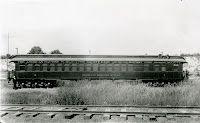 Chapel car 5 Messenger of Peace has been awarded funding by the Partners In Preservation (“PiP”). PiP is an initiative of the National Trust for Historic Preservation and the American Express Foundation, and this was the fifth year of the competition. The $50,000 grant has been made to support rehabilitation of car 5’s deteriorated structure, windows, assist in replacement of the special railcar pews, and other interior components.
25 projects competed for funding in a public vote. The top vote getter was awarded full funding and other projects were awarded grants by a committee based in part on the popular vote, but also on the overall impact of the project, viability, and sustainability. The chapel car was one of 11 projects funded by the program. Other notable projects competing for funding included the Kirkland Arts Center, King Street Station, Washington Hall, Point No Point Lighthouse and Ferry House at Ebey’s Landing.
Each historic site was responsible for rallying the public to vote. Techniques such as Facebook, fliers, emails, word of mouth, web site announcements, and open houses raised awareness of the projects. The public was invited to vote for their favorite project once a day for 30 days and the top vote getter was fully funded. In an interesting twist, two projects tied for first place: the Schooner Adventuress and Town Hall Seattle. Nine additional projects – including Messenger of Peace – were also funded. The remaining 14 projects received a $5,000 grant to help their projects proceed.
Chapel car 5 Messenger of Peace was built in 1898 for the American Baptist Publication Society and served until 1948 traveling through more than 11 states including Washington and Oregon. It was introduced as “a tool of modern evangelism” and its work touched the lives of thousands of people. It is listed on the National Register of Historic Places and is a City of Snoqualmie Landmark. A major rehabilitation effort is about to begin supported with funding awards from 4Culture, Capital Projects for Washington’s Heritage, Save America’s Treasures, private donations, and now Partners in Preservation.
Following completion of the rehabilitation effort, Messenger of Peace will be placed on exhibit in the new Train Shed exhibit building now under construction in Snoqualmie. It will be used in part to interpret how railroads were used to bring new ideas to communities.
Subscribe to:
Posts (Atom)

