2015
was a year of significant accomplishment at the Northwest Railway Museum. Read on to learn about some of the highlights!
 This
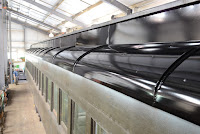
2015 continued a major multiyear effort to improve the passenger car fleet. In
the first part of the year Spokane, Portland and Seattle Railway coach 276
received an all-new standing seam lower clerestory roof complete with high
performance paint job. At the same time, a great deal interior work,
refurbished vestibule traps and doors, and assorted running gear work was
completed.
This
2015 continued a major multiyear effort to improve the passenger car fleet. In
the first part of the year Spokane, Portland and Seattle Railway coach 276
received an all-new standing seam lower clerestory roof complete with high
performance paint job. At the same time, a great deal interior work,
refurbished vestibule traps and doors, and assorted running gear work was
completed.
Spokane,
Portland and Seattle Railway coach 213 – an all wood car body with steel center
sill - received a rebuilt A end wood vestibule components as well as a rebuilt
upper diaphragm support, floor and roof repairs, interior paint, and interior header
work.
 Oregon,
Washington, Railroad and Navigation Company (Union Pacific) observation car
1590 saw significant replacement of the steel underframe cross bracing
replaced, a new leaf spring, side bearing work, floor repairs, roof repairs,
and brake system work.
Oregon,
Washington, Railroad and Navigation Company (Union Pacific) observation car
1590 saw significant replacement of the steel underframe cross bracing
replaced, a new leaf spring, side bearing work, floor repairs, roof repairs,
and brake system work.
Combine
SP and S 272 was not left out and received several new steel roof panels,
several new headers, rehabilitated clerestory windows, and several new coach
section windows.
Chapel
car Messenger of Peace received new replica lighting and additional interior
finishing work. It was also moved to its long term exhibition location inside
the Train Shed.
New
exhibits have been introduced too. “The
Railroad changed everything” debuted in the Train Shed exhibit building in fall
2015. Earlier in 2015, “Railroads built
the Pacific Northwest” was introduced.
These are just the first two of many new exhibits planned for the Train
Shed.
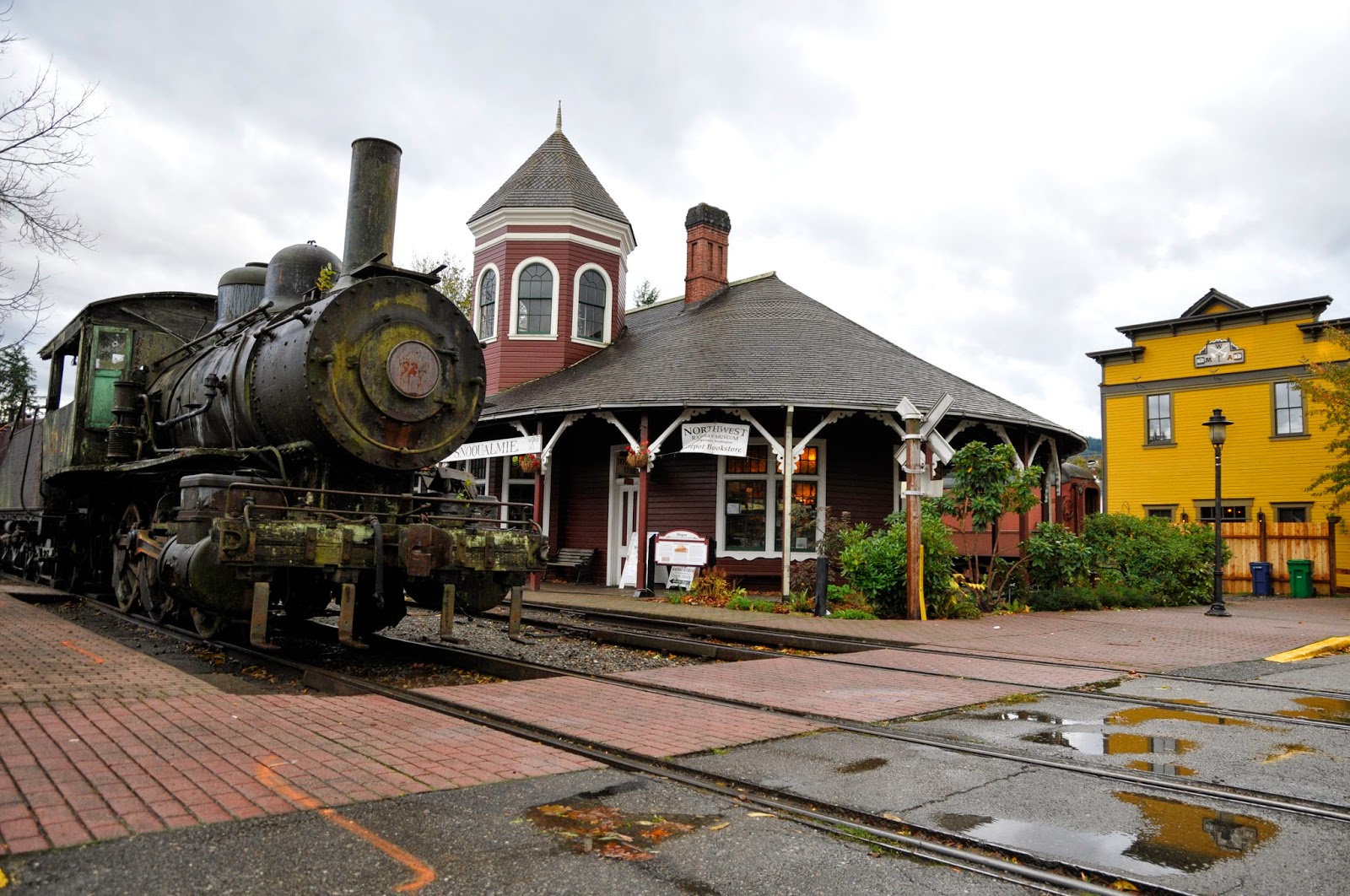
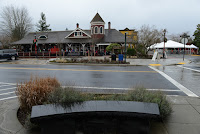 2015 was an important year for the City of Snoqualmie too. A major reconstruction of downtown Snoqualmie valued at more than $3 million was completed. It features a new boardwalk just across the tracks from the Snoqualmie Depot, new landscaping, and a 42 inch fence to deter trespassing on the tracks.
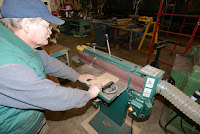 A great
number of improvements to the Conservation and Restoration Center (shop)
facility occurred in 2015 with the acquisition of several large machines
including a 48" vertical turret lathe, Cincinnati 5 milling machine,
Clemco 1000 48" belt sander/surfacer, 18" American lathe, Carelton radial drill,
Grizzly edge sander, Gould and Eberhart 24" shaper, Dewalt planer/surface, wheel press, as well as numerous hand tools
and supplies.
A great
number of improvements to the Conservation and Restoration Center (shop)
facility occurred in 2015 with the acquisition of several large machines
including a 48" vertical turret lathe, Cincinnati 5 milling machine,
Clemco 1000 48" belt sander/surfacer, 18" American lathe, Carelton radial drill,
Grizzly edge sander, Gould and Eberhart 24" shaper, Dewalt planer/surface, wheel press, as well as numerous hand tools
and supplies.
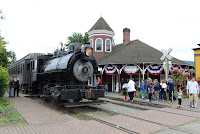 Steam
locomotives have been the really big story in 2015 with significant changes,
and progress towards a sustainable steam program. Curator Pappas' SCPC 2 received a great deal
of work in the first half of the year to improve performance and economy. Piston
rods were turned and ground, new packing installed, guides remachined and
lined, rear cylinder heads lapped in, ring grooves trued, and new rings
installed. This allowed for the Northwest Railway Museum’s first full
steam season in more than 25 years, which was a tremendous success with
ridership increases, crew training, and enhanced public education.
Steam
locomotives have been the really big story in 2015 with significant changes,
and progress towards a sustainable steam program. Curator Pappas' SCPC 2 received a great deal
of work in the first half of the year to improve performance and economy. Piston
rods were turned and ground, new packing installed, guides remachined and
lined, rear cylinder heads lapped in, ring grooves trued, and new rings
installed. This allowed for the Northwest Railway Museum’s first full
steam season in more than 25 years, which was a tremendous success with
ridership increases, crew training, and enhanced public education.
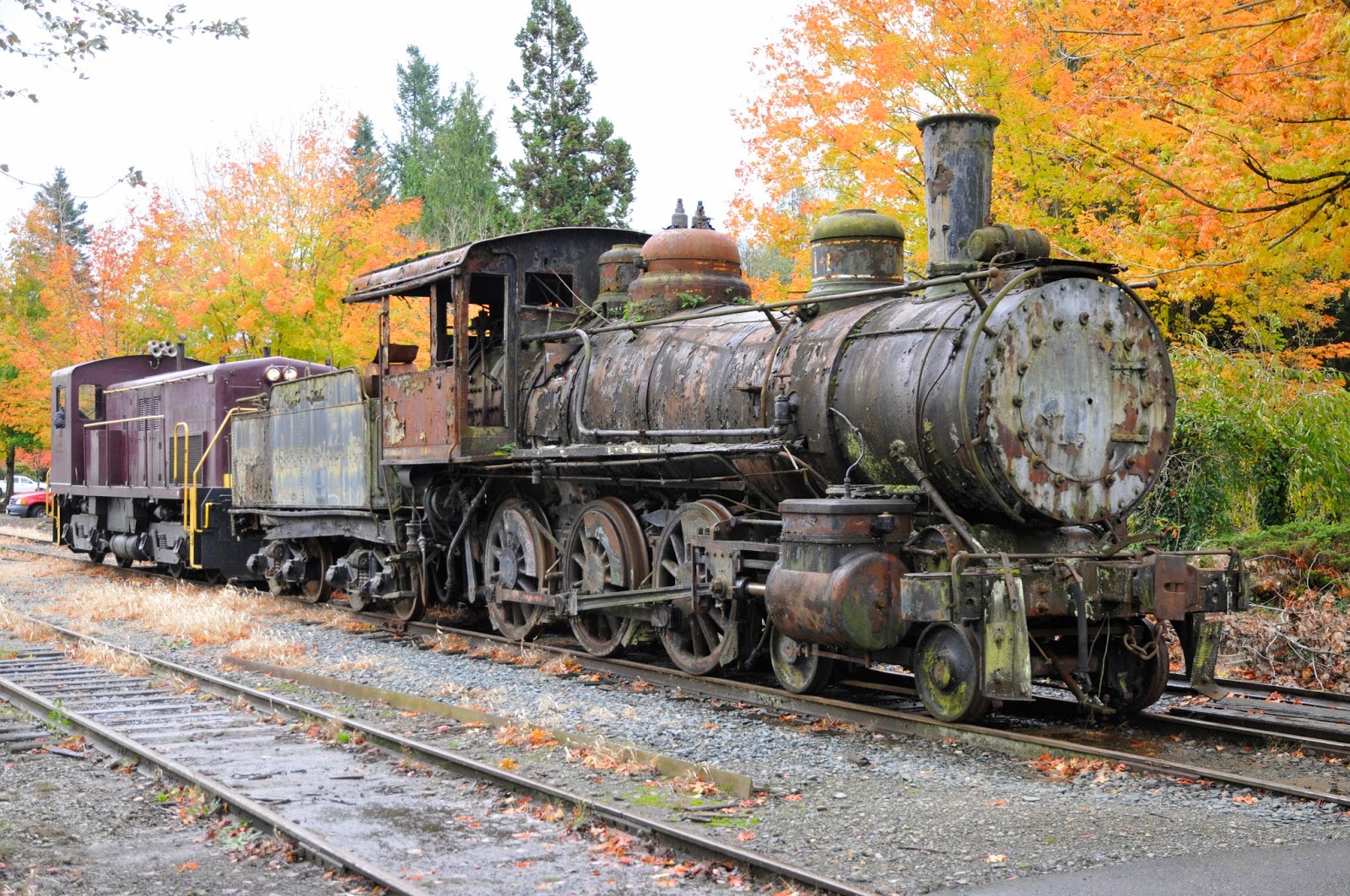
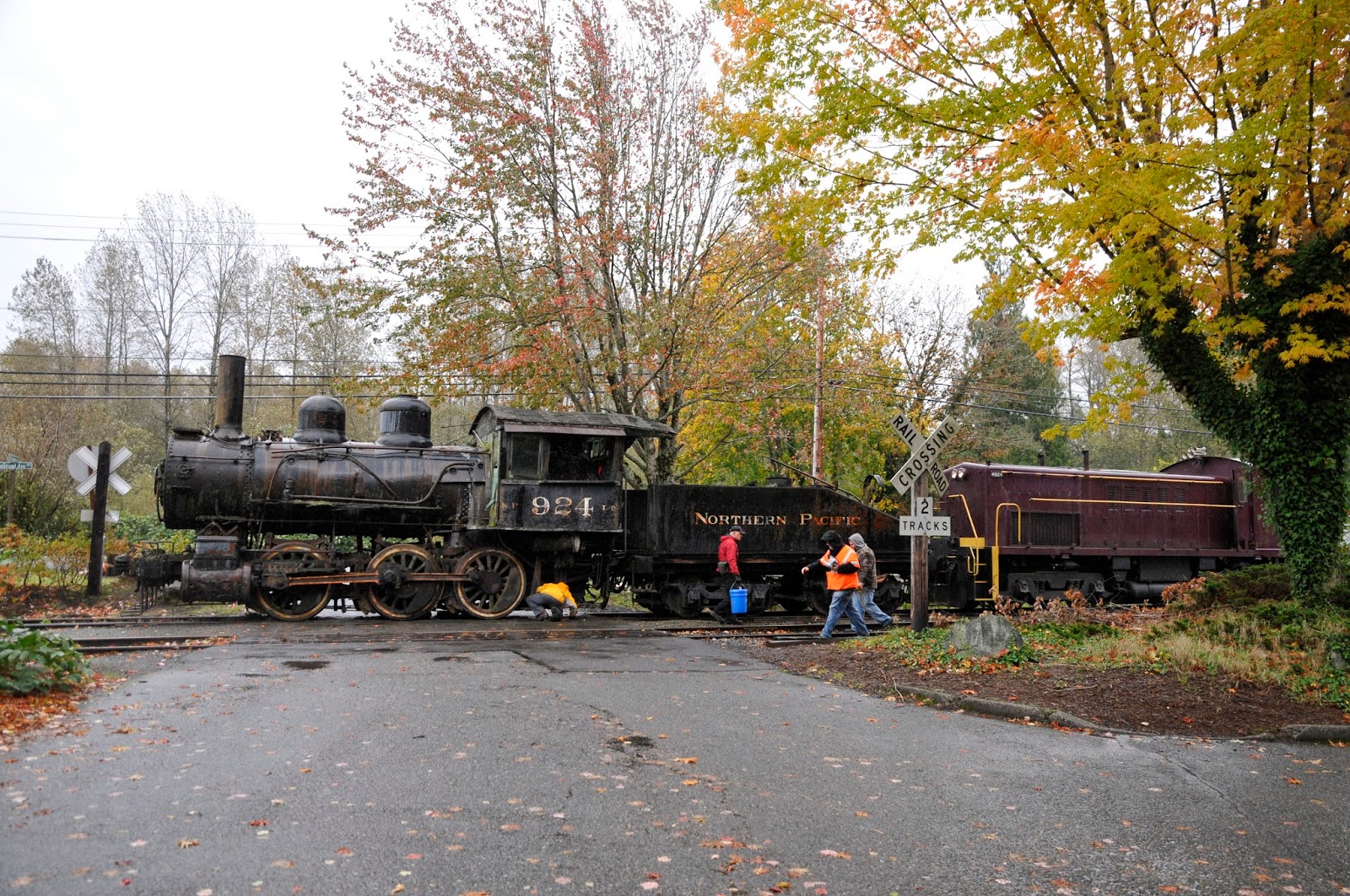
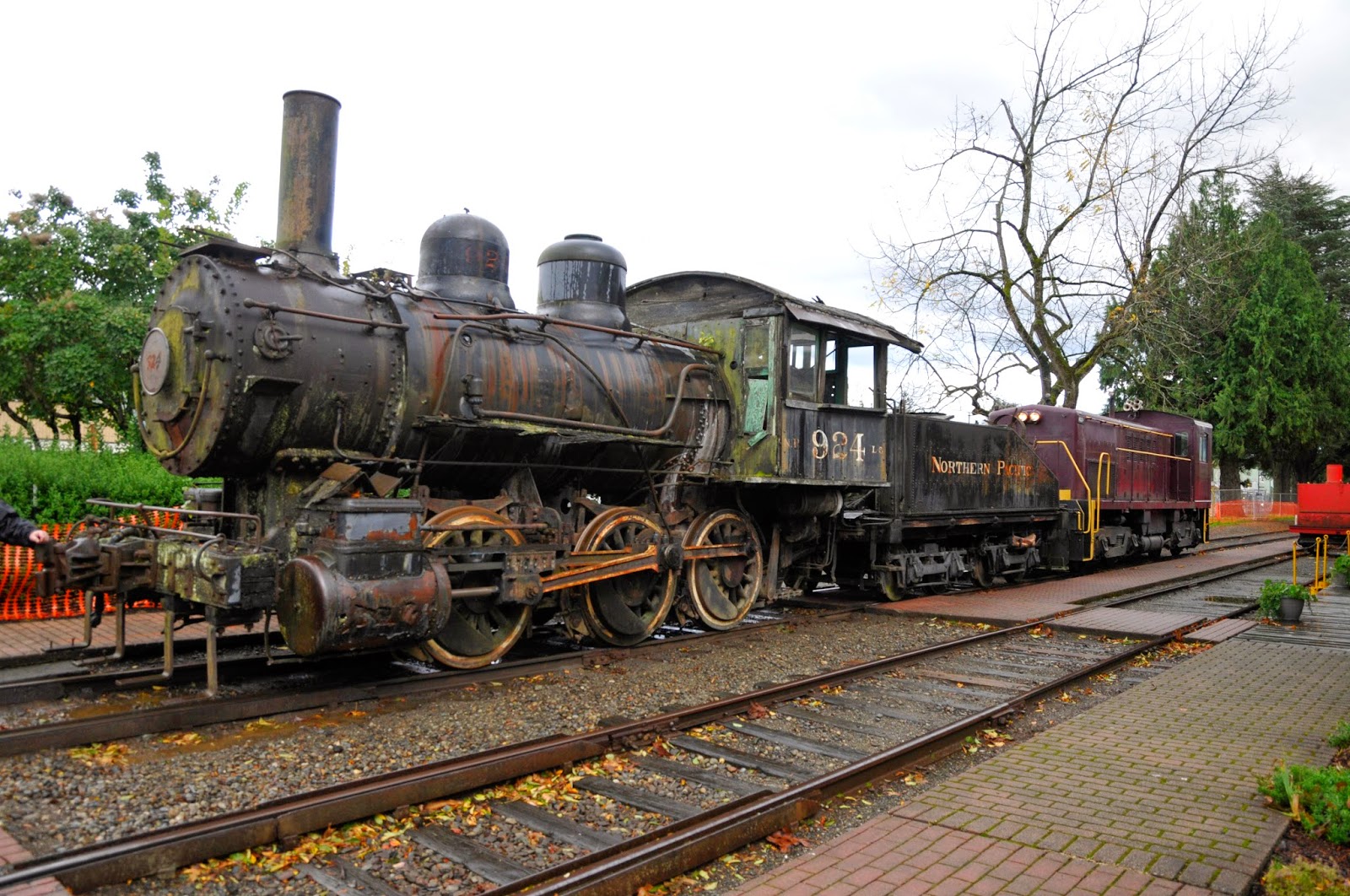
 Northern
Pacific Railway steam locomotive 924 – the Museum’s Rogers-built 1898 0-6-0 - saw
a great deal of progress towards its operational rehabilitation and restoration
to its circa 1906 appearance. In 2015, a new riveted slope back cistern was
built for the tender, in house asbestos abatement completed, form 4 boiler
engineering finished, a new riveted steam done constructed and installed, new
steam dome lid machined, firebox side sheets fabricated and welded in, and a
new cap stack fabricated to match historic photographs circa 1906.
Northern
Pacific Railway steam locomotive 924 – the Museum’s Rogers-built 1898 0-6-0 - saw
a great deal of progress towards its operational rehabilitation and restoration
to its circa 1906 appearance. In 2015, a new riveted slope back cistern was
built for the tender, in house asbestos abatement completed, form 4 boiler
engineering finished, a new riveted steam done constructed and installed, new
steam dome lid machined, firebox side sheets fabricated and welded in, and a
new cap stack fabricated to match historic photographs circa 1906.
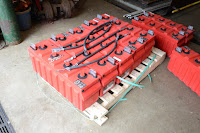 The
Museum’s diesel fleet also saw improvements with the conversion of RS4-TC 4012 from
a direct drive cooling fan to a battery of temperature-controlled electric
cooling fans using off-the-shelf components for improved reliability. This
conversion keeps the locomotive’s diesel engine operating temperature within
two or three degrees of optimal, which improves efficiency and reduces
wear. The new cooling design mimics what
modern locomotives use and has proven very reliable. Very importantly, locomotive 4012 received new batteries in 2015. New "Rolls" locomotive batteries were installed at the beginning of the season and have really helped with cool weather starts.
The
Museum’s diesel fleet also saw improvements with the conversion of RS4-TC 4012 from
a direct drive cooling fan to a battery of temperature-controlled electric
cooling fans using off-the-shelf components for improved reliability. This
conversion keeps the locomotive’s diesel engine operating temperature within
two or three degrees of optimal, which improves efficiency and reduces
wear. The new cooling design mimics what
modern locomotives use and has proven very reliable. Very importantly, locomotive 4012 received new batteries in 2015. New "Rolls" locomotive batteries were installed at the beginning of the season and have really helped with cool weather starts.
 The
Snoqualmie Depot received some important work too. The two waiting room floors were refinished
and the Depot Bookstore was relocated into the ladies’ waiting room. It had been located in the gentlemen’s
waiting room since the early 1980s. This change is allowing improved programming. For instance, Santa Train 2015 used the newly available gentlemen's waiting room as Santa's parlor.
The
Snoqualmie Depot received some important work too. The two waiting room floors were refinished
and the Depot Bookstore was relocated into the ladies’ waiting room. It had been located in the gentlemen’s
waiting room since the early 1980s. This change is allowing improved programming. For instance, Santa Train 2015 used the newly available gentlemen's waiting room as Santa's parlor.
All
in all it has been a great year for the Northwest Railway Museum. Major events have been some of the best
attended ever, ridership is up, and 2016 looks to be even better with ground
breaking coming soon for the new Railway Education Center, changes to the
operating schedule so that passengers get to visit the collection within the
Train Shed exhibit building, and the continued rehabilitation and restoration of
the collections.

 When a museum guest asks if they can check out the Cab, we usually assume they are referring to a locomotive. However, during Snoqualmie Wine Train events they are almost always talking about a Washington Cabernet from one of the fine Snoqualmie - area wineries including Sigillo Cellars, Mt Si Winery, Pearl and Stone Winery, Convergence Zone Cellars, and William Grassie Wine Estates.
  The Northwest Railway Museum kicked off the 2019 Snoqualmie Wine Train season on April 27. 140 guests enjoyed wine, Train Shed exhibits, live music from Tinkham Road, a train excursion through the woods, and even access to the Conservation and Restoration Center where they viewed ongoing work on Northern Pacific Railway locomotive 924 and Spokane, Portland and Seattle Railway coach 213.
 A new feature during month's event was the opportunity to view demonstrations in the Conservation and Restoration Center. Volunteers and Staff including Lyle, Gerry, Gary, Bob, and Wayne explained what the machines were used for and then demonstrated how they worked. Lyle gave a demonstration of the huge lathe once the centerpiece of Puget Sound Energy's Snoqualmie Falls power station machine shop.
  The Snoqualmie Wine Train is the Museum's newest event series; it was first introduced in 2018. The event features a train excursion, live music, wine tasting, and a museum visit. Museum Staff and Volunteers including Elizabeth, Cristy, Jessie, and Kacy planned this year's events. A total of five are offered in 2019; events through June are available for advance purchase now.
  The next Snoqualmie Wine Train will be May 18 and will feature a tasting experience at the Snoqualmie Falls Hydro Electric Museum. Tickets are available on the Museum's ticketing web site. Proceeds from Snoqualmie Wine Train events support programs of the Northwest Railway Museum. Join us for a great afternoon, and the opportunity to support heritage and historic preservation!