Showing posts with label interpretive railway. Show all posts

Wednesday, May 20, 2015

SCPC 2 winter work

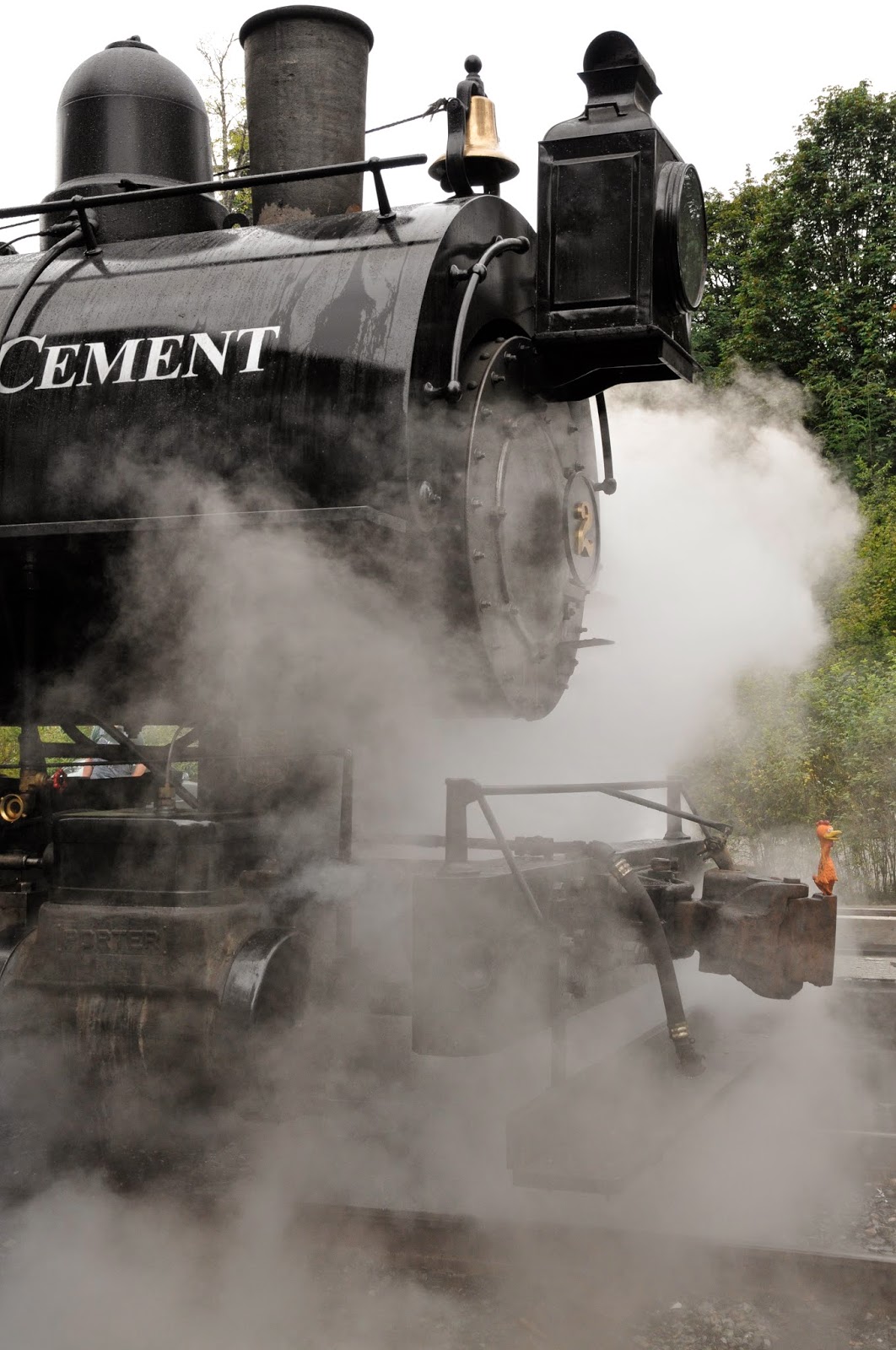
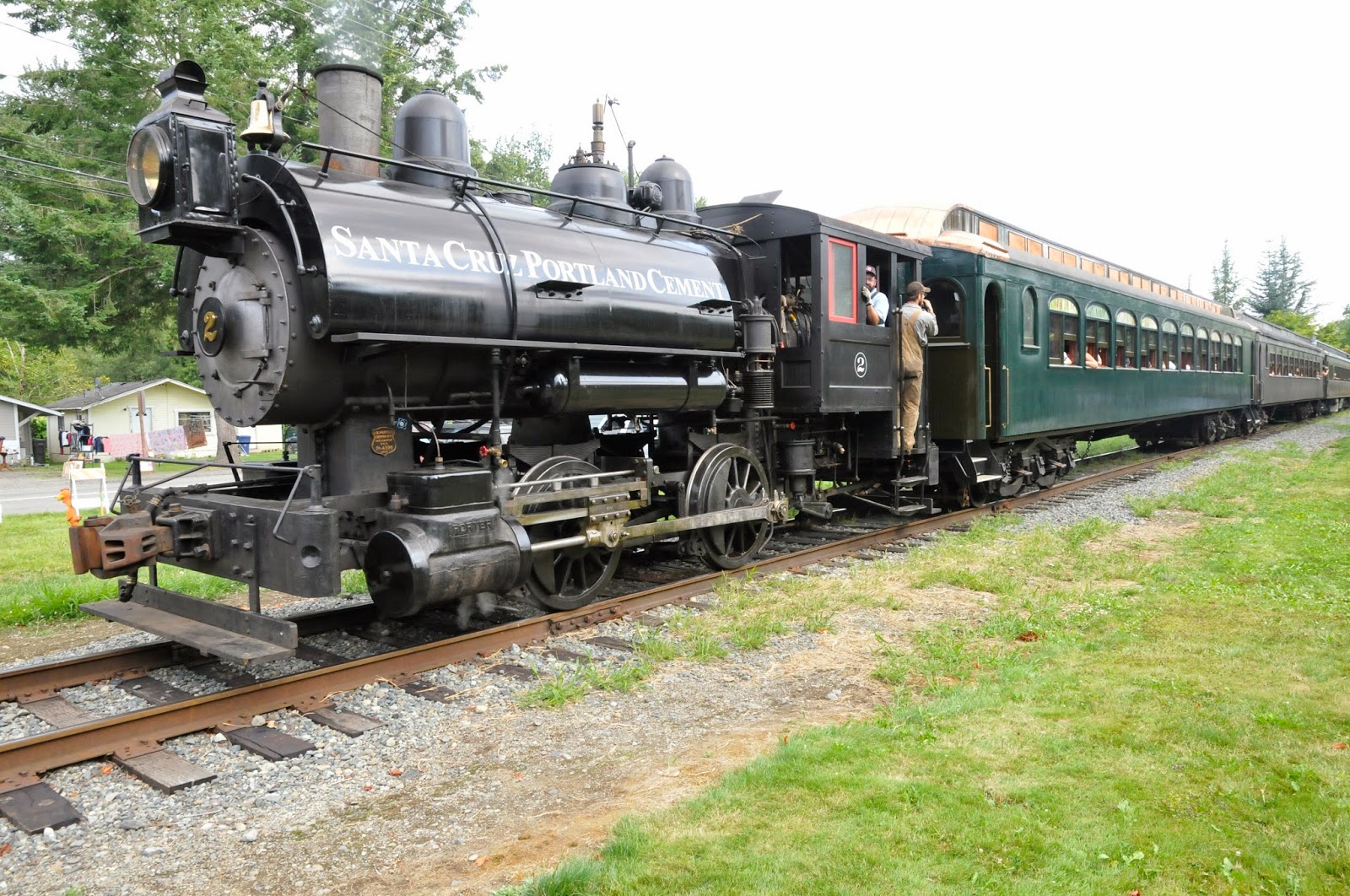
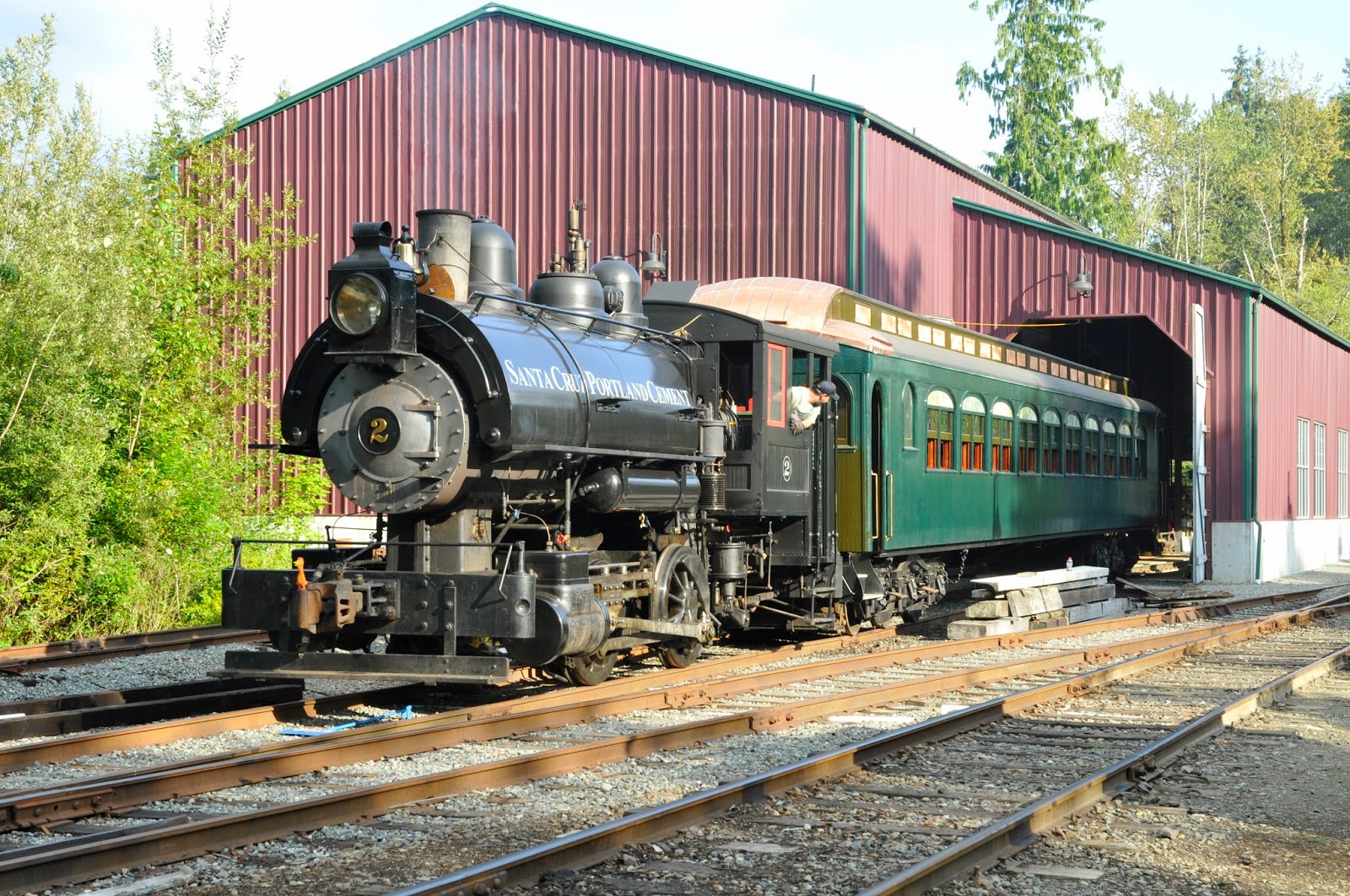
The Santa Cruz Portland Cement steam locomotive 2 ("SCPC 2") is at present the resident steam locomotive at the Northwest Railway Museum in Snoqualmie.  It is from the personal collection of Stathi Pappas, the Museum's Curator of Collections, and is the flagship of the developing steam program introduced at the Museum last year.  While the Museum's locomotive - Northern Pacific Railway 924 - undergoes a complete rehabilitation, the SCPC 2 is leading all steam excursions and is training new engine crew.  However, like all steam locomotives, an ongoing preventative maintenance and upgrade program is essential to sustainable success.  So this past winter, the SCPC 2 received some important attention.

First of all, a little about the 2.  In 2014, SCPC 2 ran over 1,000 miles on four different railroads across the west coast, and everything relating to her rebuild (completed in 2013) performed very well.  However, a few items were not addressed in the initial project as time constraints of the west coast tour just would not allow everything to be completed before departing for California.  These were remachining the piston rods, pistons and ring grooves, new piston rings, redesigned packing, new crosshead wedges, remachining and relining the crosshead guides, and remachining the crosshead slippers. Although there was no evidence of blow by, and the bores and pistons were inspected prior to being put in service, the author decided to finish these last few items before returning the 2 to service Memorial Day weekend.

In January the author and his crew of volunteers ("Team Chiggen") stripped the cylinder saddle of covers, crossheads, guides, pistons, etc and began the process of rebuilding.  In order to assure perfect concentricity and no taper of the piston rod, the best method of machining is to rough machine to round, then use a tool post grinder to assure surface finish and concentricity.  At the same time, the team turned the ring grooves, preparatory for new rings.  
 
The specification for engines this size is for a the ring groove to be .005" over the width of the rings to assure steam tightness.   Meanwhile, new rings were purchased from Niagara Piston Ring to specific dimensions. Although Team Chiggen is more than capable of making piston rings in house, it is less expensive to source completed rings than to buy the rough material to manufacture from scratch.

At the same time, the original rod packing on the locomotive left a lot to be desired.  The author had researched going to a La France style packing similar to what the Cumbres and Toltec, and the Durango and Silverton use on their locomotives, and found a very competitively priced version available through That Steam Guy.  This owner - though not associated with the seller - is quite happy with the product.  In response to more recent steam locomotive practice, also installed were four packing elements per side based upon the South African Railway and Chinese data for multiple packing elements rather than the more familiar two. 

While piston work was underway, Team Chiggen remachined and set up the crosshead guides in order to maintain perfect alignment of the piston rod within the packing gland to prevent premature wear of the piston rod, rings, pistons, and bores.  After the guides were machined and and temporarily installed, string lines were run through the bores perfectly in alignment with the cylinder and checked against the guides to assure parallelism.  

On the left side, all was well, but the right side (shown at right) required work to bring the guides into specification with the bores, thus demonstrating the necessity of doing this type of work, even if things "look ok."  

After a little effort, the piston, rod, and ring assembly were ready to re install on the right side.  Those with keen eyes will notice the presence of double rings in each groove.  The owner decided to do this rather than two wide rings due to the overwhelming evidence to support the higher sealing abilities of multiple narrow rings over wide ones.


Now, in order to assure the piston rod is running parallel to the bores and crosshead guides, the crosshead slippers themselves must be machined and fit to assure the center line of the tapered socket is in the right place.  The accompanied photos show one of the four remachined slippers ready for installation, and the entire assembly, straight and true, with a new machined crosshead wedge to assure years of trouble free operation.  

So after all this work, there is no better way to prove if it all works than to try it.  So last Sunday was test day: Team Chiggen fired the locomotive up, and put her on the head end of the last passenger train of the day.  Rest assured that diesel is in isolation, and the Chiggen is pulling the consist up the 1.2% grade to the top of Snoqualmie Falls. Everything performed admirably and the team called the test so successful, there was a second charge up the hill just for fun!

So for all of you in the local area, come on out this Saturday through Monday (Memorial Day Weekend) and take an excursion at Northwest Railway Museum behind the new and improved SCPC 2!  Fares and times are here.  And remember, there is full summer season of steam this year, and a variety of special programs including Snoqualmie Railroad Days in August, so check out the details on the Museum's web site at www.trainmuseum.org

A special thanks to Team Chiggen: John Graddon, Adam Phillips, Zeb Darrah, Karl Klontz, Nathan Iverson, Steven Hughes, Mark Speer, Mike Donnelly, Jason Hill, CJ Vargas, Bill Gejerstad, David Wilhite, Andy Walker, Ken Liesse, Jason Sobcynski, and many others who help make this all possible!

--SCPC winter work was a guest post by Northwest Railway Museum Curator of Collections Stathi Pappas--

Tuesday, March 31, 2015

Tamping for a better ride

Many different disciplines are required to prepare for the Museum's operating season.  After a winter shutdown, there is a certain amount of work re-activating the locomotives and coaches, but the bigger effort is performing annual maintenance.  Maintaining track, bridges, and signals require significant resources to inspect, repair and maintain.  Statistically, most railroads each year will invest about 60% of their resources into those three areas.

For the Museum's track and bridges, the last 12 months have been busy.  Substantial reconstruction of bridge 35's east pier, installation of more than 750 ties (including 500 feet of reconstructed track at Snoqualmie Falls) and surfacing of more than a mile of track are among the year's highlights.

During the last few weeks, crews have been changing ties and surfacing track in North Bend.  Surfacing is a slow process that uses a ballast tamper, jacks, and a good set of eyes!  The tamper is a Jackson that was delivered to the Northern Pacific Railway in the 1950s.  Before track tampers were introduced, men with tamping bars performed this work.

Check out the dip in the track in the first photo below, and how Mark S. and Brandon P. made it disappear in the second.  Come up to Snoqualmie and ride the train this coming Saturday, April 4 and check it out for yourself!  First train departs Snoqualmie at 11:30 AM.


Sunday, September 7, 2014

More steam please!

We heard you ask, and now we are answering: more steam at the Northwest Railway Museum!  

The next weekend of steam featuring Mr. Pappas' Santa Cruz Portland Cement locomotive 2 will be October 4 and 5, 2014 on the Fall Schedule with departures from Snoqualmie.  Fares are $18 for adults, $15 for seniors and $10 for children.  You can purchase tickets in advance for departure from Snoqualmie with no added cost using the Northwest Railway Museum's web site.

But wait, there's more!

Halloween Train is an annual tradition  held the last weekend of October every year at the Northwest Railway Museum.  Trains run on the summer schedule on October 25 and 26, 2014, but this year they will be hauled by the Santa Cruz Portland Cement locomotive 2.  Fares are $18 for adults, $15 for seniors and $10 for children.  You can purchase tickets in advance for departure from Snoqualmie with no added cost using the Northwest Railway Museum's web site; your tickets will be held at will call for pickup at least 30 minutes prior to your scheduled departure.

And there is even more!


One day of Santa Train 2014 will also be hauled by steam! SCPC 2 will pull the Friday, December 19, 2014 Santa Train. There is no extra charge for steam, but advance tickets will incur a modest fee to defer the cost of postage.  All Santa Trains depart from the North Bend Depot and your ticket includes refreshment served at Snoqualmie, and a small gift for all participating children.  Tickets will be on sale to the public beginning September 13, 2014 using the Museum's web site.


Friday, July 4, 2014

125 years of excursions

President Snook 
addressed the crowd 
before the train
departed.
July 4, 1889 marked the inaugural passenger train excursion from Seattle to Snoqualmie Falls along the lines of the Seattle, Lake Shore and Eastern Railway Company. Hosted by the ME Church Society, tickets cost $2 return, which was a veritable fortune for people living in Washington Territory during that era. 125 years later, on July 4, 2014, the Northwest Railway Museum commemorated the anniversary with speeches, a ribbon cutting, and two special trains to Snoqualmie Falls.  

Reenactors from Fort Nisqually made the anniversary trains
come alive and joined Mayor Matt Larson and President
Dennis Snook for the ribbon cutting.
157 tickets were issued for the anniversary trains, and many of those visitors joined the dedication speech and ribbon cutting that began on July 4 at noon.  Marketing Director Peggy Barchi welcomed everyone and Museum President Dennis Snook gave an inspirational talk that helped set the mood for the anniversary trains. City of Snoqualmie Mayor Matt Larson praised the Museum's preservation efforts and highlighted the importance of the railway in local history.  Historic reenactors dressed in Victorian-era clothing attended too and added an element of authenticity to the Century-old excursion train.

Vintage clothing added to the event.
Reeneactors pose for photos while riding on coach 218.
Coach 218, which is nearing completion in an extensive
rehabilitation effort made a brief appearance too.
The pinnacle of Snoqualmie Falls.  In 1889 there was no lodge,
power station, or dam.

Monday, July 29, 2013

Keeping track safe and reliable

The grade immediate below the track
structure is called the subgrade.  It was
disturbed by an excavator during a
recent construction project conducted
adjacent to the track.
Good track is easy to take for granted, but a safe and reliable railroad depends on it.  And good track requires a stable subgrade, especially within the 1:1 live load zone beneath the track.  (The 1:1 live load zone is the area that extends downward from the ends of the ties at a 45 degree angle.)  Steep slopes, poor soils, seasonal flooding, adjacent uses, earth quakes, and heavy annual precipitation are all among the conditions that must be considered to ensure stability.  So when recent construction activities were found to have affected the subgrade at Snoqualmie Falls, immediate steps were taken to protect the track and trains. 

A rock slope was constructed to stabil-
ize and strengthen the subgrade for
more than 200 linear feet.  Geotextile
fabric was placed below the rocks to
improve performance of saturated soils.
First, for trains already operating, speed was immediately reduced to a crawl to reduce dynamic forces on the track and subgrade.  Second, a licensed geotechnical engineer was called in to inspect the subgrade below the track and determine if and under what conditions trains could continue to operate.  Third, rehabilitation work was performed to mitigate the issues discovered in the affected area using a design that was reviewed by other engineering professionals. 

A new rock slope below
the track at Snoqualmie
Falls.
The long term rehabilitation plan was developed by the Museum's geotechnical engineering consultant at PanGEO Inc and reviewed by other knowledgeable professionals including Museum volunteer Dave H., who is a civil engineer - thanks Dave!

The design uses "heavy loose rock," which are large rocks 30 inches and more across.  It relies in part on prior stabilization work performed when soil anchors were driven under the track and a retaining wall was installed at the toe of the slope.  To address the current issue, the slope on the subgrade below the track was covered with geotextile fabric and the heavy loose rocks were keyed into the sloped using an excavator.  This design places several hundred tons of rock on the subgrade slope and restores integrity to the 1:1 zone beneath the track.  However work did not stop there.  Areas affected by construction activities that were outside the 1:1 zone but within the 2:1 slope of the railway grade are being strengthened with a foot or more of quarry spalls three to six inches in diameter.

Work took three days to perform and was completed between scheduled trains.  What is most impressive to Spike is that the total elapsed time between discovering the issue and implementing final rehabilitation was just four days!  Trains are continuing to operate and will resume track speed when authorities determine that stability has been fully restored.  So a stable subgrade once again supports good track.

Monday, February 25, 2013

Main Street crossing reconstruction

"We've been working on the railroad" and there is another new highway crossing to show for! 


Railroad crossings represent one of the bigger funding challenges for the Northwest Railway Museum.  With a total of 18 roadway crossings, the Museum devotes significant resources towards maintenance and reconstruction.  This latest project cost was in excess of $51,000 and replaced a double track crossing in downtown North Bend, which was required to continued operating trains into the North Bend Depot.


Concrete panels arrive and await
installation on Main Street as an
excavator sets the grade.
Main Street was last reconstructed in 1988.  Normally, a new double track crossing of that size would have cost over $100,000 and there was no funding to perform work on that scale.  Fortunately, the Museum was able to leverage several opportunities to make the project viable.

The Museum learned about a small track removal project in the City of Redmond, about 20 miles from the Museum.  There, two concrete tub crossings that were installed in 1997 were being removed to allow installation of a new sewer.  Often, used tub crossings are scrapped because they are difficult to remove without damage.  So with little commercial value, the City of Redmond was able to donate the panels to the Museum.  In the end, of the 70 panels removed, 40 were reclaimed, repaired and reused.  This “saved” the Museum over $35,000 versus the cost of new crossing tubs.
The new crossing takes shape on Main
Street in North Bend.  Concrete tubs
eliminate the use of railroad ties in the
crossing.
 
The Museum was able to secure a grant from the Washington Utilities and Transportation Commission (“WUTC”).  The WUTC is one of the agencies that provide regulatory oversight of the Museum’s railway.   They maintain a Grade Crossing Protective Fund, which awarded a $20,000 grant towards the cost of new welded rail and its installation. 

Other important project support came from the City of North Bend, which provided all the traffic control required to close the road and detour traffic, and forgave three years of user fees for the North Bend Depot for a combined benefit of over $11,000.
The crossing has been completed; it opened as soon as the
asphalt cooled.

And the Museum was able to secure some relay rail for the side track (new rail was used on the main).  As well, the Museum's dedicated volunteers were able to perform the required repairs on the used crossing panels.

The project allowed for six days of construction but it was completed in less than five.  RailWorks Track Systems, Asphalt by George, and Snoqualmie's Imhoff Contractor Crane Service performed the balance of the work. 

Thursday, October 11, 2012

Checkin' It Twice

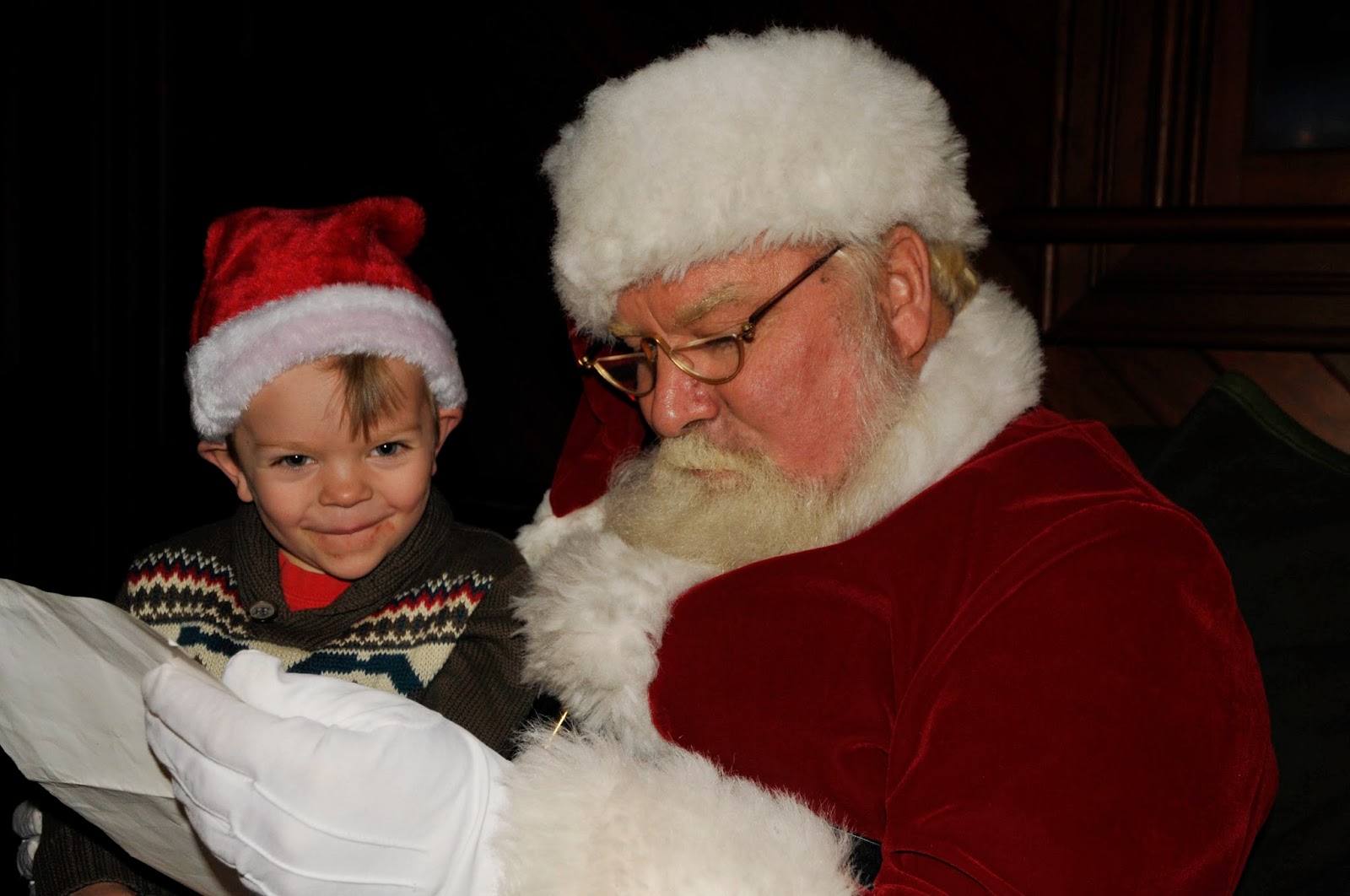
Santa Claus checks his list while riding Santa Train (R).


Imagine you and your family aboard a vintage train with the scenic Cascade foothills outside your antique coach window. As you journey from North Bend to Snoqualmie, you hear the wheels on the train clickety-clack beneath you. The train pulls into the station and you see Santa Claus, Ms. Claus and Zoe the Elf waving from the platform. As you alight from the train, the aroma of fresh-baked cookies greets you. You hurry into the railway kitchen car for hot cocoa and coffee to go with your cookies. Santa is waiting to see your family in the depot and he has a small gift for each of your children.

Is this a dream? No, it’s Santa Train®, the more than four decades old tradition at the Northwest Railway Museum. You and your family can be part of it. Purchase your Santa Train tickets online or in person now, or by phone beginning October 29.

Santa and the cookies will be waiting for you!

Tuesday, October 9, 2012

Bad to beautiful conclusion

Thanks to dozens of donors and local corporate sponsors, the Bad to Beautiful initiative has been successfully completed! 

Workers from Queen Anne
Upholstery unpack and
unload the reupholstered
seats.
The Museum participated in the Seattle Foundation’s Give BIG event last May.  Give BIG 2012 was the second annual day of giving hosted by the Seattle Foundation with participation from hundreds of local charities.  Individual donations were partially matched by a stretch pool funded by local companies including Seattle Sounders FC, Microsoft and JP Morgan Chase.  Donors made contributions through the Museum's page at the Seattle Foundation.
The Museum pledged support from the event for new seat upholstery on the interpretive railway.  Seats in car 1590 were selected - they were last reupholstered during the Roosevelt administration.  That 1913-built car’s seats actually came from an early 20th Century first class coach because the 1590’s original café and parlor chairs were removed during WW II.
Completed seat cushions in car 1590.
Twenty two seats in the car 1590 have now been reupholstered with commercial fabric, a product several orders of magnitude more durable (and costly!) than fabric used on home furniture.  The dark green mohair-like material is very similar to the original fabric used on these seats nearly 100 years ago.  Work was performed by Seattle's Queen Anne Upholstery and the results are spectacular!  So come and check out the new seats – train departs weekends through the end of October and again for Santa Train. 
Thank you to everyone who supported Give BIG 2012, corporate donors who matched those donations, and to the Seattle Foundation for hosting it!