
Part 1 was published on February 27 and described a business card for H. J. Geisler's tasting room that was discovered hidden in the roof structure of chapel car 5 Messenger of Peace. The car was built at Dayton, Ohio's Barney and Smith Car Company in 1898. So who was H.J. Giesler? Thanks to some clever research by volunteer Doris A., his identity is much clearer.
H.J. Geisler was Henry J. Geisler of Dayton, Ohio. He was born in Ohio in August, 1869. In 1893 he married Clara and by 1894 appeared in the Dayton, Ohio city directory as the proprietor of "choice wines, Liquors and Cigars." In 1895 his business was identified as the "Sample Room," which continued to share his home address. Business must have been good because he was able to afford cutting-edge technology - by 1899 he listed a telephone number!
The Henry J. Geisler Family was listed in the 1900 US Census, which revealed a daughter, Florence, born September 1894. Henry's occupation was listed as "Saloon Keeper."
Henry J. Geisler continued to appear in the city directory until 1905. Sadly, in 1906, the city directory listed Mrs. Henry J. Geisler as the Sample Room proprietor. The 1910 US Census confirmed that Clara was a widow and head of household with daughter Florence, 15 years of age, not in school.
So a small business card found in the roof of chapel car Messenger of Peace reveals a few secrets from Dayton, Ohio at the turn of the 20th Century.
Friday, May 4, 2012


Thursday, April 19, 2012
From Bad to Beautiful - inspired by you
Last year, The Seattle Foundation orchestrated an incredible one-day online giving event that - thanks to you - raised nearly $19,000 for the Northwest Railway Museum. It was the most successful single day of giving in the Museum’s history.
This year on May 2, from midnight to midnight Pacific Time, GiveBIG is happening again. But it's no same-old, same-old. Inspired by your recent comments on our Facebook page, the Northwest Railway Museum will direct funds raised during GiveBIG 2012 toward seats and upholstery on our interpretive railway.


FROM BAD TO BEAUTIFUL
Our last major seating effort was in 1998 when seats in coach 276 were reupholstered at a cost of more than $25,000. Now it’s time to continue the transformation. Will you participate in GiveBIG and help us raise another $25,000, so that older coach seats throughout the train may be restored to their former glory?
Each of the coaches was built about 100 years ago - between 1912 and 1915. When they were new, they were elegant. Today’s “bad to beautiful” effort will reclaim a little of that spirit and make a ride aboard the Snoqualmie Valley Railroad more enjoyable - and more authentic.
HERE’S HOW TO GROW YOUR GIFT ON MAY 2
 On Wednesday, May 2, visit The Seattle Foundation’s online Giving Center between midnight and midnight Pacific Time. Make a donation of any size to the Northwest Railway Museum.
The Seattle Foundation and business sponsors will match a share of every donation made during that 24-hour period. BUT . . . the larger our percentage of the total amount of donations made to all nonprofits during that day, the larger our percentage of the matching stretch pool.
If you give just once to the Northwest Railway Museum, please give on May 2.
WANT A REMINDER?
- If you'd like to receive an email reminder on May 2, please subscribe to our (approximately monthly) e-newsletter. We'll send a brief reminder the morning of May 2.
- We'll also post The Seattle Foundation's online Giving Center link on our website and on our Facebook page on May 2.
- RSVP on the GiveBIG 2012: From Bad to Beautiful event page we created. We'll send a brief reminder message via Facebook.
Thursday, April 5, 2012
Trains are running again!
 |
The Jackson tamper was introduced in
the 1950s on the Northern Pacific
Railway and continues in a new role
at the Northwest Railway Museum.
|
 |
Vibrating work heads pack ballast
(rock) under the ties.
|
 |
A hyrail excavator from RailWorks
installs a new stringer in one of the
Museum's bridges. Each timber is 9 inches x 18 inches and can be over 30 feet long. |
Monday, February 27, 2012
Chapel car secrets Pt 1
 Rehabilitation of a landmark property invites many opportunities to learn from the object. The chapel car rehabilitation is no exception - the structure has been largely untouched since it was built at Dayton, Ohio in 1898 and there is much to learn from it.
Work on the car's roof began in January 2012 and in late February an unusual discovery was made: a business card for H. J. Geisler at a Dayton, Ohio saloon was found in the car's roof sandwiched between the soffit, blocking, and roof decking. The Sample Room advertised "fine wine, liquor, and cigars," and claimed "Kentucky whiskey a specialty."
The American Baptist Publication Society ordered Messenger of Peace from the Barney and Smith Car Company in early 1898. Eugene Barney was a lay Baptist minister and supported the church - his company built all seven Baptist cars. Baptists strongly advocated temperance and it is easy to believe the placement of the saloon's card in the roof was both intentional and in spite of the church's values, yet "why" cannot be proved with the evidence at hand. As wood railcar experts, however, Team Chapel Car has strong evidence to suggest that the placement of the card in the roof was intentional.
So when, who and how did the saloon calling card find its way into the roof of a Baptist chapel car? Here is what Spike knows:
- This area of the car has been inaccessible since 1898. The decking was covered with Terne roofing material that was nailed to the deck with all the seams soldered in situ. There was only one set of nail holes in the roof decking and they match the nails protruding from the bottom of the Terne metal.
- The card is about the same width as the soffit so it had to be carefully placed parallel with the outer edge as the roof deck was fastened in place. It was located along the edge of the upper roof deck and was accessible to Barney and Smith's car builders.
- Messenger of Peace served in at least 11 States but car records assembled by Wilma Taylor in This Train is Bound for Glory do not show a return visit to Dayton after the car departed for its dedication in May 1898.
So what do you think is the story of the wine, liquor and cigar ad in the roof of the chapel car? Write us a story about how the card got in the roof and send it to us; the Museum would be delighted to publish any interesting theories!
Wednesday, February 15, 2012
New interpretive signs at the Depot
 Thanks to a recent donation from the 4th Division/Pacific Northwest Region/National Model Railroad Association specifically marked for education, the Museum has designed and produced three new interpretive signs for large objects at the Snoqualmie Depot. The signs were fabricated by Fossil Industries, Inc. in New York. Fossil is considered a leader in outdoor sign fabrication. (From their website: “The World’s most durable signs and murals.”) For those familiar with the Centennial Trail signs, Chinook Signs Inc. designed the interpretive panels and Fossil fabricated them. (Chinook Signs Inc. also designed and fabricated the sign stands.)
The Museum’s Educator, Jessie Cunningham, is responsible for all exhibits and interpretation at the Museum. She worked closely with Fossil – in what turned out to be a lengthy process – to order the new signs. The first step was getting a quote to determine if signs were in the budget – they were. Cunningham and Executive Director Richard Anderson determined the three objects to create signs for. All three large objects will remain at the Snoqualmie Depot for the foreseeable future – which is why they were selected: Army Ambulance Kitchen car 89601, J.H. Baxter Co. locomotive 6-C, and Army Transportation Corps locomotive 7320 (also known as Cecil the Diesel). Each large object now has a new 17” x 17” sign.
Cunningham designed a template that was complimentary to the outdoor signs al
 ready at the Depot, as well as the Centennial Trail. Instead of being rectangular in shape, these new signs are square but feature similar design components. Sign content is a combination of both previously written and new material. Each sign also contains a minimum of one image. Volunteers Rich W. and Bob L. assisted with historical and technical accuracy. The revision process was long but necessary to insure the best product possible. Once Fossil received final approval it took six weeks to receive the sign order.
One aspec
 t of sign design that was really important was determining how and where to affix the signs to the artifacts. Two of the three artifacts move around the site at the Depot, depending on the season and special event. So the Museum needed to be able to move the signs from side to side, depending on which track the car or locomotive was on. Another important part of this was determining how to affix the signs, since it was important to avoid permanently damaging the artifact (drilling holes, etc.). Cunningham submitted photographs and detailed measurements which Fossil used to design special hardware for each sign.
The Museum is thrilled to add these new signs to the Depot's exhibits. This additional interpretation will enhance the visitor experience. Don’t forget to check out the new signs next time you are at the Depot!
Images
(Top) Cunningham poses with the new Kitchen car sign. The sign is affixed to the steps below the large sliding door located at the middle of the car.
(Middle) Sign for locomotive 7320. Double click the image to see a larger version!
(Bottom) Locomotive 6-C is a popular destination at the Museum, since children are invited to climb in the locomotive and “drive the train.” Now parents can learn all about the history of the locomotive while they keep a close eye on their children.
Thursday, February 2, 2012
Clampers with a Messenger of Peace
 Late last month The Ancient and Honorable Order of E Clampus Vitus (“ECV”) gave a day of service to the chapel car Messenger of Peace
rehabilitation. The Doc Maynard Chapter 54-40 brought 14 member volunteers to sand windows in preparation for shellac, move
the kitchen stove in, prepare moldings for installation on the outside of the car, strip paint from the interior floor, prepare castings for paint, and
remove some of the last interior panels for refinishing. Chapter 54-40 contributed 54 person hours to
the project and the group retired to the Snoqualmie Falls Brewery for a late lunch.
Late last month The Ancient and Honorable Order of E Clampus Vitus (“ECV”) gave a day of service to the chapel car Messenger of Peace
rehabilitation. The Doc Maynard Chapter 54-40 brought 14 member volunteers to sand windows in preparation for shellac, move
the kitchen stove in, prepare moldings for installation on the outside of the car, strip paint from the interior floor, prepare castings for paint, and
remove some of the last interior panels for refinishing. Chapter 54-40 contributed 54 person hours to
the project and the group retired to the Snoqualmie Falls Brewery for a late lunch. 
ECV is a
fraternal organization dedicated to the preservation and study of western
heritage. They are often known as simply "Clampers", and are also a group of folks
who know that 54-40 could have been a real fight!
 Clampers have four objectives and the third is quite interesting: they cannot remember if they are a drinking historical society or an historical drinking society. In other words, just like this blog post, they don't take themselves all that seriously. Regardless, the Museum was honored to welcome them for their third visit to the
Northwest Railway Museum and hope they will be back again soon. Thank you Clampers!
Clampers have four objectives and the third is quite interesting: they cannot remember if they are a drinking historical society or an historical drinking society. In other words, just like this blog post, they don't take themselves all that seriously. Regardless, the Museum was honored to welcome them for their third visit to the
Northwest Railway Museum and hope they will be back again soon. Thank you Clampers! Tuesday, January 31, 2012
Looking back at 2011
2012 has started out with heavy weather including heavy
rain, over 9 inches of snow and an ice storm.
So as we complete our latest storm recovery, it is appealing to
recollect some of the achievements for 2011.
 In February 2011, rehabilitation of chapel car 5 Messengerof Peace began in earnest. A crew of
three worked full time on the car and completed all the car body structural
repairs. By year end, more than 7,000
hours had been invested in the project and all the exterior cladding was being
applied. Other highlights include manufacture
of replacement windows and the draft and platform sills.
In February 2011, rehabilitation of chapel car 5 Messengerof Peace began in earnest. A crew of
three worked full time on the car and completed all the car body structural
repairs. By year end, more than 7,000
hours had been invested in the project and all the exterior cladding was being
applied. Other highlights include manufacture
of replacement windows and the draft and platform sills.
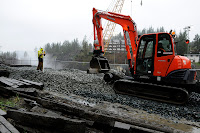 In March and April, a major track rehabilitation project was
performed. Back in August 2010 an engineering
decision made by another local company caused the railroad at Snoqualmie Falls
to shift. The rehabilitation project was
funded by that company and removed the affected track that parallels the
Snoqualmie Falls Generating Station plant.
The underlying soils were excavated and new railroad ballast was placed
and compacted. Then, the track – along with
about 30% replacement ties - was reconstructed, aligned, leveled and tamped.
In March and April, a major track rehabilitation project was
performed. Back in August 2010 an engineering
decision made by another local company caused the railroad at Snoqualmie Falls
to shift. The rehabilitation project was
funded by that company and removed the affected track that parallels the
Snoqualmie Falls Generating Station plant.
The underlying soils were excavated and new railroad ballast was placed
and compacted. Then, the track – along with
about 30% replacement ties - was reconstructed, aligned, leveled and tamped.
 In July, the Meadowbrook Way SE railway crossing was
reconstructed. Funded by the City ofSnoqualmie along with generous support from the Snoqualmie Casino this two lane
crossing was rebuilt with welded rail, oak ties, new ballast and concrete
crossing panels. The City of Snoqualmie
then repaved the entire road, which is the secondary gateway to downtown
Snoqualmie and the Northwest Railway Museum.
In July, the Meadowbrook Way SE railway crossing was
reconstructed. Funded by the City ofSnoqualmie along with generous support from the Snoqualmie Casino this two lane
crossing was rebuilt with welded rail, oak ties, new ballast and concrete
crossing panels. The City of Snoqualmie
then repaved the entire road, which is the secondary gateway to downtown
Snoqualmie and the Northwest Railway Museum.
 In August, the Museum unveiled locomotive 1, a Fairbanks
Morse model H 12-44 that was used by the White River Lumber Company (Weyerhaeuser)
at their Enumclaw operation in east King County. This project was funded by the
National Railway Historical Society and private donors. Volunteers performed most of the work.
In August, the Museum unveiled locomotive 1, a Fairbanks
Morse model H 12-44 that was used by the White River Lumber Company (Weyerhaeuser)
at their Enumclaw operation in east King County. This project was funded by the
National Railway Historical Society and private donors. Volunteers performed most of the work.

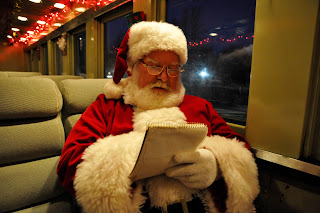 2011 was also a successful year for attendance too. 11,039 people – a Museum record – attended
Santa Train, and impressive numbers were recorded for Railroad Days in August,
Day Out With Thomas in July and Halloween Train in October.
2011 was also a successful year for attendance too. 11,039 people – a Museum record – attended
Santa Train, and impressive numbers were recorded for Railroad Days in August,
Day Out With Thomas in July and Halloween Train in October.
 In February 2011, rehabilitation of chapel car 5 Messengerof Peace began in earnest. A crew of
three worked full time on the car and completed all the car body structural
repairs. By year end, more than 7,000
hours had been invested in the project and all the exterior cladding was being
applied. Other highlights include manufacture
of replacement windows and the draft and platform sills.
In February 2011, rehabilitation of chapel car 5 Messengerof Peace began in earnest. A crew of
three worked full time on the car and completed all the car body structural
repairs. By year end, more than 7,000
hours had been invested in the project and all the exterior cladding was being
applied. Other highlights include manufacture
of replacement windows and the draft and platform sills. In March and April, a major track rehabilitation project was
performed. Back in August 2010 an engineering
decision made by another local company caused the railroad at Snoqualmie Falls
to shift. The rehabilitation project was
funded by that company and removed the affected track that parallels the
Snoqualmie Falls Generating Station plant.
The underlying soils were excavated and new railroad ballast was placed
and compacted. Then, the track – along with
about 30% replacement ties - was reconstructed, aligned, leveled and tamped.
In March and April, a major track rehabilitation project was
performed. Back in August 2010 an engineering
decision made by another local company caused the railroad at Snoqualmie Falls
to shift. The rehabilitation project was
funded by that company and removed the affected track that parallels the
Snoqualmie Falls Generating Station plant.
The underlying soils were excavated and new railroad ballast was placed
and compacted. Then, the track – along with
about 30% replacement ties - was reconstructed, aligned, leveled and tamped.
In June, Cristy L. joined the Northwest Railway Museum as
the full time volunteer coordinator. She
has volunteer and collections management experience, and degree in history &
historical archeology. She has already
made a huge difference during events, regular train operations, in the CRC and with apply volunteer skills to the Museum's many other needs.
Also in June, the Museum participated in the Seattle Foundation's first-ever GiveBig event and raised almost $19,000 in support! Many donor funds were matched by their employers such as Boeing and Microsoft. All donor's funds were matched by the Seattle Foundation's match pool further leveraging their gifts. (Watch for GiveBig again in 2012!)
Also in June, the Museum participated in the Seattle Foundation's first-ever GiveBig event and raised almost $19,000 in support! Many donor funds were matched by their employers such as Boeing and Microsoft. All donor's funds were matched by the Seattle Foundation's match pool further leveraging their gifts. (Watch for GiveBig again in 2012!)
 In July, the Meadowbrook Way SE railway crossing was
reconstructed. Funded by the City ofSnoqualmie along with generous support from the Snoqualmie Casino this two lane
crossing was rebuilt with welded rail, oak ties, new ballast and concrete
crossing panels. The City of Snoqualmie
then repaved the entire road, which is the secondary gateway to downtown
Snoqualmie and the Northwest Railway Museum.
In July, the Meadowbrook Way SE railway crossing was
reconstructed. Funded by the City ofSnoqualmie along with generous support from the Snoqualmie Casino this two lane
crossing was rebuilt with welded rail, oak ties, new ballast and concrete
crossing panels. The City of Snoqualmie
then repaved the entire road, which is the secondary gateway to downtown
Snoqualmie and the Northwest Railway Museum.  In August, the Museum unveiled locomotive 1, a Fairbanks
Morse model H 12-44 that was used by the White River Lumber Company (Weyerhaeuser)
at their Enumclaw operation in east King County. This project was funded by the
National Railway Historical Society and private donors. Volunteers performed most of the work.
In August, the Museum unveiled locomotive 1, a Fairbanks
Morse model H 12-44 that was used by the White River Lumber Company (Weyerhaeuser)
at their Enumclaw operation in east King County. This project was funded by the
National Railway Historical Society and private donors. Volunteers performed most of the work.
The highlight of the year was the grand opening of the new
exhibit building at the Railway History Center.
This followed construction – largely by the Museum’s volunteers - of
more than 1,000 feet of track and five turnouts allowing the first rail cars to
be moved into the building. On September
17, invited guests joined the trustees, volunteers and staff to formally open
the building to the public.
In October, the Museum's Facebook page received its 1,000th like!
In October, the Museum's Facebook page received its 1,000th like!
 2011 was also a successful year for attendance too. 11,039 people – a Museum record – attended
Santa Train, and impressive numbers were recorded for Railroad Days in August,
Day Out With Thomas in July and Halloween Train in October.
2011 was also a successful year for attendance too. 11,039 people – a Museum record – attended
Santa Train, and impressive numbers were recorded for Railroad Days in August,
Day Out With Thomas in July and Halloween Train in October.
Subscribe to:
Posts (Atom)

