Friday, March 18, 2016

One Mallet too many

Locomotive 108 at the Snoqualmie
Depot.
Responsibly managing a museum collection means that some artifacts are added to the collection and at other times they are removed.  In short, the Collection changes to meet the needs of the institution and its Mission.

At the Northwest Railway Museum two of the criteria used to evaluate the collection are support of the Mission and redundancy.  A decade ago, a number of large artifacts including an electric locomotive from Utah, a coach from the Midwest, and a steam locomotive from California were deaccessioned (removed) from the Collection.  However, the process of evaluating the collection continues every day.

For more than 40 years, the Museum has had custody or ownership of three Mallet-type 2-6-6-2 steam locomotives.  All three have a great deal in common: they operated in the Pacific Northwest; were built within a few years of each other, by the Baldwin Locomotive Works; are nearly identical in design and size; illustrate the same narrative (they tell the same story); and each require tremendous resources to properly care for.  With those facts, the Museum Board of Trustees and Staff reached a consensus to deaccession one 2-6-6-2 Mallet steam locomotive.  So which one?

The Museum's Trustees
required insulation to be
removed before the l08
could leave the property.
The 108 was chosen as the locomotive to deaccession.  The 108 was built in 1926 and served the Weyerhaeuser Timber Company until 1954.  It is a tank engine (think Thomas the Tank Engine!) and aside from a tender, locomotive 6 (one of the other Mallets in the Museum collection) is nearly identical.  (Locomotive 11 is also a 2-6-6-2 Mallet. It is a slightly different design, and is a tank engine converted to a tender engine.  It is owned by Washington State Parks under the curatorship of the Northwest Railway Museum.  It remains on exhibit at the Snoqualmie Depot.)


Locomotive 108 was prepared for shipping
at the Museum's Conservation and
Restoration Center.
As luck would have it, another heritage railway operates a locomotive nearly identical to locomotive 108.  The Black Hills Central Railroad in Hill City and Keystone, South Dakota operates their 2-6-6-2T steam locomotive 110 in daily service on a more than 4% grade.  Their long term plan called for acquisition of a second similar locomotive to allow for expansion, and better operational
coverage in the event of a mechanical problem or other issue.  So the stage was set for an appropriate and welcome change in ownership that would assure a bright future for this valuable museum artifact.  


Locomotive 108's boiler hoisted onto
a truck for the 20 hour journey to Hill
City, South Dakota.
Speaking with Black Hills Central President Meg Warder shortly after a deal was reached stated, "the Black Hills Central Railroad ... is honored to have the opportunity to [acquire] and restore the Weyerhaeuser Timber Co #108 Baldwin from the Northwest Railway Museum.  Our knowledgeable and dedicated crew will restore the engine back to its glory with the intention of having the engine in service by 2018.  The #108 engine will proudly work alongside the BHCRR’s restored #110 Mallet,  the current powerhouse of the Black Hills line."

 
The rear steam engine hoisted onto a
truck bound for the Black Hills Central.
 
Speaking while the loading process was underway, Northwest Railway Museum Executive Director Richard Anderson stated, "museum collections are dynamic and their size and scope must reflect the institution's available resources to care for it.  We are delighted to have found a successful heritage railway willing to take on the massive undertaking of rehabilitating, restoring and operating this impressive historical artifact."


Monday, February 29, 2016

Finance and administration on track too

There are many facets to a successful and sustainable railway museum.  Rarely seen but always felt are the results of successful finance and administration efforts.  This week provided a excellent illustration when the Northwest Railway Museum closed on a tax exempt bond issued by the Washington State Housing Finance Commission.  The once-in-four-years opportunity closed February 29, 2016.

Building the Railway History Center in Snoqualmie has been a monumental effort for an organization the size of the Northwest Railway Museum.  There is now more than 33,000 square feet of indoor exhibit, collection storage, and collection care space.  And another 5,000 square feet will be under construction in a few short weeks., which will provide public restrooms, a classroom, an archival vault, collection lab, admissions and program offices.  All of this is the result of tens of thousands of volunteer hours, thousands of full time staff hours, and an investment of millions of dollars, most of it donated to the cause.  However, some of the infrastructure has eluded even the best fund raising efforts.  Fortunately, the Museum found a viable alternative.

Washington State has a tax exempt bond program that was created for low income and below market rate housing, and for community facilities such as hospitals, and even history museums.  After a months long process, Pacific Continental Bank of Eugene, Oregon has purchased a tax exempt bond from the Washington State Housing Finance Commission.  (Pacific Continental is a regional bank that specializes in banking services for non profit corporations.  They have a branch in Bellevue, Washington too.) Proceeds of this 25 year bond are underwriting current and future infrastructure needs including the city water main extension to the site, the force sewer main that stretches more than 1/2 mile into Snoqualmie, a parking lot, and more.  The interest rate is similar to a jumbo home mortgage, and provides long term financial stability for the Museum.  Now the Museum can focus on the next phase of construction: let the digging begin!

Tuesday, February 16, 2016

Under the Dome and more

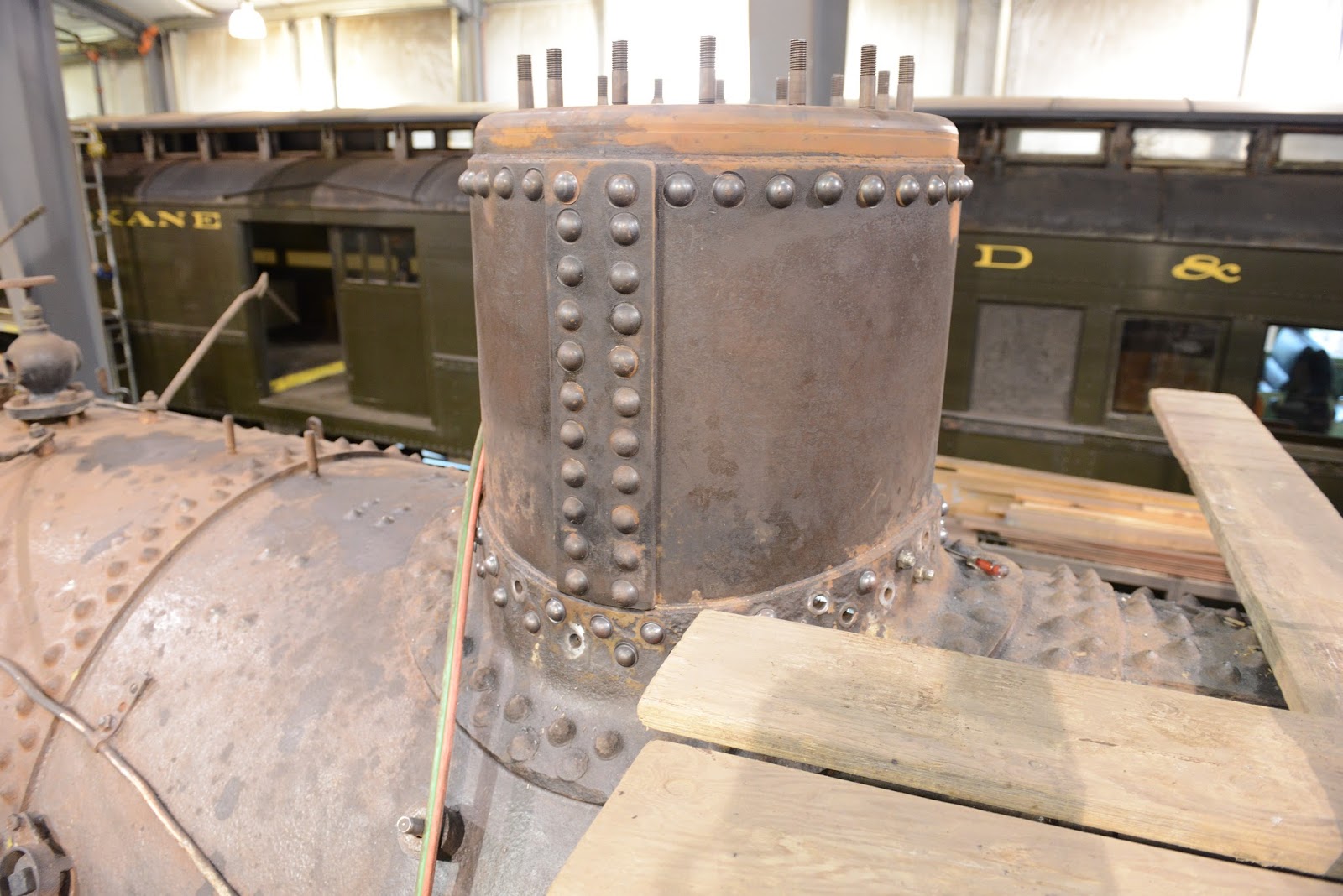
The New Year is off to a blazing start at the Northwest Railway Museum!  Already, significant progress has been achieved on Northern Pacific Railway steam locomotive 924 with substantial completion of some major boiler work and, thanks to new funding from the Emery Rail Heritage Trust, has included pretty much everything under the dome... 

The key to any successful steam locomotive rehabilitation is quality work done to exacting standards, particularly in the realm of the pressure vessel (boiler) and running gear.  No locomotive will operate properly or safely if these areas are not completely and adequately examined, rebuilt, and maintained in service. 

The pressure vessel on NP 924 was by no means in good condition for an easy return to service, and as previous blog postings have noted, new firebox side sheets had to be installed, as well as a new steam dome.  In particular, the new steam dome construction involved an alteration of the original design in order to assure safety in operation.  The original design employed a longitudinal lap seam where the flat plat the dome was rolled from overlapped slightly and was held via rivets.  This design of joint induces nonlinear stresses that degrade the sheet material adjacent to the joint, and if not properly monitored can lead to potentially catastrophic failure. 

The original dome exhibited signs of degradation such as cracking and rivet shearing, indicating the original design was not ideal.  In order to rectify this situation, a new dome was built employing riveted buttstrap construction of the longitudinal joint.  A buttstrap joint has the rolled round of the barrel butt together for the longitudinal seam, and employs plates inside and out with rivets through all three on either side of the seam.  This design is far superior and does not impart any non linear forces in the plates other than hoop tension.  In order to accomplish this repair, the joint efficiency needed to be calculated so as to assure a safety factor of at least four times.  In the final analysis, the safety factor was found to be over seven times, assuring a long life of service ahead.  After the design process was completed, the Federal Railroad Administration (FRA) in Washington DC had to approve the alteration and engineering so as to assure public safety.  This step completed, and using funding awarded by the Emery Rail Heritage Trust, construction of the dome was able to progress unfettered. 

At least until appropriate rivet material could not be sourced.  Fabricating the dome and readying it for installation on the boiler was accomplished with appropriate boiler rivets from a local source.  However, the smaller ¾” rivets that would secure the dome to the flange on the back of the barrel could not be acquired.  The steel used for pressure vessel riveting is made to a specification called ASTM A31 Grade B (or A31b for brevity), which is an extremely ductile, low carbon steel.  In searching for a cost reasonable source, it became clear that proper materials for steam locomotive construction continue to get harder to find.  Luckily, the Museum’s curator Pappas had a small stash of A31b bar, and through the construction of a rivet jig, new rivets could be formed in house at the Museum using material of the correct specification.  Once this task was completed, the dome was riveted on and ready for service. 

Following this task, part of the longitudinal seam on the first barrel course was in need of work.  The sand dome had collected water beneath it and extensively corroded the outer welt strip of the buttstrap joint.  This welt strip needed partial replacement, as well and replacement of 22 rivets, and a small pad weld on each side of the seam.  Pad welding is compliant with the regulations, but must be conducted to a national standard.  The areas in question were small enough that they did not require prior approval, but the process was still communicated to the regulatory authorities prior to undertaking the work. 
 
Pad welding was conducted by curator Pappas, who holds 6g welding certification, and following appropriate National Board Inspection Code (NBIC) procedures so as to eliminate internal stresses from the welding process.  The work was then radiographed (x-rayed) and proven to be clean and free from all defects.  Following this, a new welt strip patch was welded into the seam, and new rivets installed. 
 
As noted above, the large rivets needed for the seam were difficult to source so these were also manufactured in house of A31b.  The installation of these rivets was doubly difficult in that they had to be inserted from the inside of the boiler, backed with an air buck, and the formed head driven on the outside with an air hammer.  This may not seem overly difficult, until one realizes the delivery pipe from the throttle runs directly under this seam, only three inches from where the final rivet heads would be!  Through the creation of specialized tooling, and a large influx of enthusiastic volunteer labor, the Museum’s team was up to the task, and the riveting was completed in one day. 

FRA inspectors
Brandon, Gary (ret.),
and Zack check out
the 924.
After this step, the next task was to bring in the local FRA inspectors to review the work and inspect the interior of the boiler, which must be done prior to the installation of fire tubes.  To get ready for this step, the interior of the barrel was cleaned to bare metal, tube sheets straightened and dye penetrant tested to check for cracking, and tube holes polished.  Our work passed the FRA’s stringent standards with flying colors and was approved for completion of the tube job. 

Let it be reiterated that boiler work such as this is not to be undertaken lightly, and the importance of the public’s safety is always first priority when undertaking pressure vessel work.  Stay tuned for the next installment in the continuing rehabilitation of Northern Pacific Railway steam locomotive 924: tubing! 

Thursday, December 31, 2015

Highlights from 2015

2015 was a year of significant accomplishment at the Northwest Railway Museum. Read on to learn about some of the highlights!
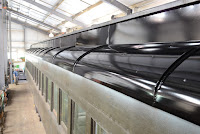
This 2015 continued a major multiyear effort to improve the passenger car fleet. In the first part of the year Spokane, Portland and Seattle Railway coach 276 received an all-new standing seam lower clerestory roof complete with high performance paint job. At the same time, a great deal interior work, refurbished vestibule traps and doors, and assorted running gear work was completed.
Spokane, Portland and Seattle Railway coach 213 – an all wood car body with steel center sill - received a rebuilt A end wood vestibule components as well as a rebuilt upper diaphragm support, floor and roof repairs, interior paint, and interior header work.
Oregon, Washington, Railroad and Navigation Company (Union Pacific) observation car 1590 saw significant replacement of the steel underframe cross bracing replaced, a new leaf spring, side bearing work, floor repairs, roof repairs, and brake system work.
Combine SP and S 272 was not left out and received several new steel roof panels, several new headers, rehabilitated clerestory windows, and several new coach section windows.
Chapel car Messenger of Peace received new replica lighting and additional interior finishing work. It was also moved to its long term exhibition location inside the Train Shed.
New exhibits have been introduced too.  “The Railroad changed everything” debuted in the Train Shed exhibit building in fall 2015.  Earlier in 2015, “Railroads built the Pacific Northwest” was introduced.  These are just the first two of many new exhibits planned for the Train Shed.
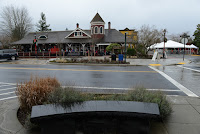
2015 was an important year for the City of Snoqualmie too.  A major reconstruction of downtown Snoqualmie valued at more than $3 million was completed.  It features a new boardwalk just across the tracks from the Snoqualmie Depot, new landscaping, and a 42 inch fence to deter trespassing on the tracks.
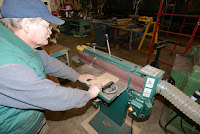
A great number of improvements to the Conservation and Restoration Center (shop) facility occurred in 2015 with the acquisition of several large machines including a 48" vertical turret lathe, Cincinnati 5 milling machine, Clemco 1000 48" belt sander/surfacer, 18" American lathe, Carelton radial drill, Grizzly edge sander, Gould and Eberhart 24" shaper, Dewalt planer/surface, wheel press, as well as numerous hand tools and supplies.
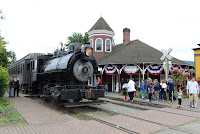
Steam locomotives have been the really big story in 2015 with significant changes, and progress towards a sustainable steam program.  Curator Pappas' SCPC 2 received a great deal of work in the first half of the year to improve performance and economy. Piston rods were turned and ground, new packing installed, guides remachined and lined, rear cylinder heads lapped in, ring grooves trued, and new rings installed.  This allowed for the Northwest Railway Museum’s first full steam season in more than 25 years, which was a tremendous success with ridership increases, crew training, and enhanced public education.
Northern Pacific Railway steam locomotive 924 – the Museum’s Rogers-built 1898 0-6-0 - saw a great deal of progress towards its operational rehabilitation and restoration to its circa 1906 appearance. In 2015, a new riveted slope back cistern was built for the tender, in house asbestos abatement completed, form 4 boiler engineering finished, a new riveted steam done constructed and installed, new steam dome lid machined, firebox side sheets fabricated and welded in, and a new cap stack fabricated to match historic photographs circa 1906.
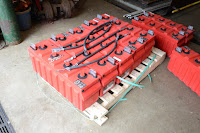
The Museum’s diesel fleet also saw improvements with the conversion of RS4-TC 4012 from a direct drive cooling fan to a battery of temperature-controlled electric cooling fans using off-the-shelf components for improved reliability. This conversion keeps the locomotive’s diesel engine operating temperature within two or three degrees of optimal, which improves efficiency and reduces wear.  The new cooling design mimics what modern locomotives use and has proven very reliable.  Very importantly, locomotive 4012 received new batteries in 2015.  New "Rolls" locomotive batteries were installed at the beginning of the season and have really helped with cool weather starts.
The Snoqualmie Depot received some important work too.  The two waiting room floors were refinished and the Depot Bookstore was relocated into the ladies’ waiting room.  It had been located in the gentlemen’s waiting room since the early 1980s.  This change is allowing improved programming.  For instance, Santa Train 2015 used the newly available gentlemen's waiting room as Santa's parlor.
All in all it has been a great year for the Northwest Railway Museum.  Major events have been some of the best attended ever, ridership is up, and 2016 looks to be even better with ground breaking coming soon for the new Railway Education Center, changes to the operating schedule so that passengers get to visit the collection within the Train Shed exhibit building, and the continued rehabilitation and restoration of the collections.
 

Monday, December 14, 2015

Let there be light

The rehabilitation and restoration of chapel car 5 Messenger of Peace was substantially complete in 2013, but a number of restorative details have been ongoing, long-term projects.  Often it is the search for additional evidence supporting the alteration that takes the greatest effort, and it can be very time-consuming. Interior lighting was one of those projects. 

It is known that the chapel car was built with pendant light fixtures fueled with kerosene; those fixtures appear in a widely-circulated builder's photo taken in May 1898.  However, this lighting was never very bright and was reportedly replaced sometime in the early 20th Century.  When work began on the chapel car, Museum staff discovered the chimneys for the kerosene lighting covered with sheet metal confirming that a change had occurred while the car was in the service of the Baptist Church.  So what lighting did the chapel car get, and when? 

The chapel car is listed on the National Register of Historic Places, and the Snoqualmie and King County Landmark Register.  Those important listings - and funding they have helped leverage - do not allow for speculative efforts, and require use of the Secretary of the Interior Standards for the Treatment of Historic Properties.  These standards encourage - even mandate - careful, methodical research and record keeping. So during the course of the chapel car project, more than 2,000 pages of research were collected or created as a record of work performed.

Letter stating nature of lighting installed in MoPWhile reviewing research into the Messenger of Peace and its service to the American Baptist Publication Society, references to "gasoline" lighting and the purchase of gasoline were found throughout chapel car expense reports.  A letter discovered by chapel car researchers and authors Wilma and Norman Taylor in the collection of the American Baptist Historical Society detailed what had been installed in the Messenger of Peace.  (Click on the image to see a full size version of the letter.)  The Taylor's research also discovered that Messenger of Peace spent two weeks in a Missouri railroad shop in June 1912. Evidently, the chapel car received a new "Coleman Lighting System," manufactured by the Hydro Carbon Company of Wichita, Kansas, most likely in June 1912.  (In 1913 the manufacturer reincorporated as the Coleman Lamp Company.)

Coleman maintains an archive of old prints and catalogs.  Through their good graces, the Museum obtained catalog cuts of similar lighting.  Then, by chance, a light fixture from the same model line appeared on Ebay and was purchased.  Using the model 27 lamp, the Museum's curators were able to match the mounting hardware to the ceiling heat shields that remained in the car until rehabilitation began in 2011.  In addition, iron pipes discovered in the car's walls were consistent with those used for institutional installation of gasoline lighting so that a centralized fuel supply could be used for all the lamps.  So with substantial evidence, a plan to replicate the lighting from the period of significance (1917, when the chapel car traveled through Snoqualmie) was developed. 

The chapel car is a predominantly wood structure.  So it was no surprise to have discovered oversize metal heat shields on the interior ceilings.  These metal pans were fabricated from light gauge sheet metal, were badly corroded, and were also designed to cover the old kerosene lighting chimney ports.  New metal heat shields were fabricated by SkilFab in Snoqualmie using the one completely intact original as a pattern.  Meanwhile, instead of iron fuel pipes, the car was wired with car and locomotive wire (fine wire strands inside extra thick insulation) and a new breaker box.  Modern electrical boxes capable of supporting light fixtures were installed in place of the gasoline light bases.  

The shades and decorative bonnet are unlike any lamp components manufactured today.  So the plan included making new parts using a process called metal spinning, and performed in Auburn at Pacific Wire.  Next, the decorative ridge on the bonnet (Coleman actually called it a crown!) was copied and cutout using a laser.  CEL Manufacturing in Woodinville performed that work by producing a series of 60 inch sections that could be cut and spot welded to the bonnet. The entire bonnet was sent to Art Brass Plating in Seattle to be nickel plated. Back in the Conservation and Restoration Center, the shade portion of the fixture was enameled white on the inside and green on the outside.  A metal conical heat dispersion feature often mounted right above the chimney was made and installed too, as evidence supports its use in applications where the fixture was mounted close to the ceiling.  For the glass globe, Rejuvenation Lighting in Portland supplied hand blown glass globes.  The electrical components were supplied by Antique Lamp Supply.  Then, and finally, 1,600 lumen LED bulbs were installed with a dimmer to allow the light intensity to be varied just as it was when it was  provided by a gasoline burner.


The chapel car lighting project was more complex that originally envisioned, but has met the objective of helping faithfully restore the car to its 1917 splendor.  The Museum is grateful for the support of King County 4Culture who funded most of the effort through the Landmarks Capital program.  Support for this project was also received from the American Baptist Home Mission Societies, the American Baptist Historical Society, National Society of the Colonial Dames of America in Washington, and the Northwest Railway Museum general fund.  Volunteer Arnie L. wired the car, and Arnie and staff member (shipwright) Gary James performed the installation.  In all, a diverse collection of resources and skills were brought together to further the efforts in historic preservation of this unique cultural resource!

Friday, December 11, 2015

Seasons Greetings!

The Museum's key staff represent a very
diverse group of qualifications that sup-
port many mission-critical functions. 
From left to right, Gary James, ship-
wright; Richard Anderson, executive
director; Cristy Lake, registrar and
volunteer coordinator; Lara Ballinger,
bookstore buyer; Stathi Pappas, large
object curator; Peggy Barchi, market-
ing manager; Jessie Cunningham,
deputy director and educator; James
Sackey, visitor services; and Jennifer
Youngman, bookkeeper.
From all the Trustees and Staff at the Northwest Railway Museum to all the supporters, patrons, volunteers, donors, visitors, and all 'round fans, thank you for another great year.

There are many components in a successful Museum, and chief among those are willing and generous supporters.  So whether you donated goods, services, funds, volunteer hours (more than 14,000 in 2015!), or bought tickets to visit or ride, thank you for your role in making 2015 successful!

The senior staff recently got together to reflect on the last 12 months, and tour Chapel Car 5 Messenger of Peace.  As 2015 winds down, the Museum has secured necessary permits to build the new Railway Education Center, installed a new exhibit in the Train Shed, made significant progress in the rehabilitation of steam locomotive 924, successfully nominated 924 to the Landmark Register, operated more than 37 days of steam with the visiting SCPC 2, refinished the floors in the Snoqualmie Depot, performed additional rehabilitation on chapel car 5 Messenger of Peace, and performed major work on coach 276

Wow, 2015 was a busy year!  Yet 2016 looks like it may be even busier with plans for construction of the new Railway History Center, near completion of locomotive 924, additional coach work, and more.  Your support always makes a difference and we invite you to consider - even encourage you - an end of year donation to the Northwest Railway Museum so that this important work may continue.

Seasons Greetings, and thank you for your support.

Friday, November 27, 2015

Locomotive 924 Landmarked

Snoqualmie Landmarks Commission,
key Landmarks staff, and Museum
Executive Director Richard Anderson
pose for a post-vote photo in the
Snoqualmie council chambers.
The Northern Pacific Railway steam locomotive 924 has been successfully nominated to the City of Snoqualmie and King County Landmarks Register.  The Snoqualmie Landmarks Commission met in Snoqualmie on November 19, 2015 and voted to designate the 1899-built locomotive.  Officially, the commission considered the nomination that was submitted by the Northwest Railway Museum earlier this fall.  Commissioners toured locomotive 924 now undergoing rehabilitation in the Conservation and Restoration Center, and asked a variety of informed questions.  Commissioners later convened in Snoqualmie’s Council Chambers to vote on the staff recommendation to place the object on the Snoqualmie and King County Landmark Registers.

The staff report made a number of interesting observations about locomotive 924:
Catalog cut from the Rogers Locomotive
Company catalog of 1900.
  • The NPR Locomotive 924 is significant under (King County Landmarks) Criterion A1 for its association with the growth and development of King County.  Locomotives were the engine of the industrial revolution and western expansion, and the Northern Pacific Railway (NPR) was instrumental in setting broad patterns of settlement and development in King County and across the northern portion of the country from Minnesota to Washington.  NPR 924 served this railway for twenty-five years.

  • NPR 924 is significant under Criterion A3 as an excellent and rare example of a classic late 19th century steam locomotive. It features many of the common elements of both larger and smaller locomotives, and in many respects was “state of the art” for the era. There are very few locomotives originally owned by mainline railroads that survived beyond WW II.

  • NPR 924 is also significant under Criterion A5 as an outstanding and rare example of a switching locomotive constructed by Rogers Locomotive Company in Paterson, New Jersey, the second largest builder of steam locomotives in America.  Rogers was an innovative manufacturer who developed many features that became common – or even standard – on nearly all steam locomotives.  Rogers produced more than 6,000 locomotives.  Only 20 known examples remain world-wide; 11 of those are in the United States.
 
924 at Millwood, WA, after retirement
from the Northern Pacific.
The Landmarks Register listing for locomotive 924 is important for the Northwest Railway Museum and its mission.  A listing on the Landmarks Register conveys certain legal protections for the object regardless of who owns it.  It provides additional public recognition of its historical importance, and its role in the interpretation of King County’s railroad history.  City and County landmarks are eligible to apply to certain grant programs, and for technical assistance.

The Landmark Register is an important initiative of King County, which is one of the largest counties in the United States.  A King County Historic Preservation Officer – Jennifer Meisner - is appointed by the King County Executive.  Under her direction is a full time staff in the King County Historic Preservation Program that provides technical advice, project impact reviews for public agencies, and Interlocal landmark programs for suburban cities including Snoqualmie and North Bend.  Other objects on the Landmarks Register at the Northwest Railway Museum include Chapel Car 5 Messenger of Peace, Northern Pacific Railway rotary snowplow 10, and the Northern Pacific Railway/Seattle Lake Shore and Eastern Snoqualmie Depot.