Saturday, March 29, 2014

Bridge repairs

So you think you can repair a bridge?  Well great, you start tomorrow!  Now if only it were that simple . . .

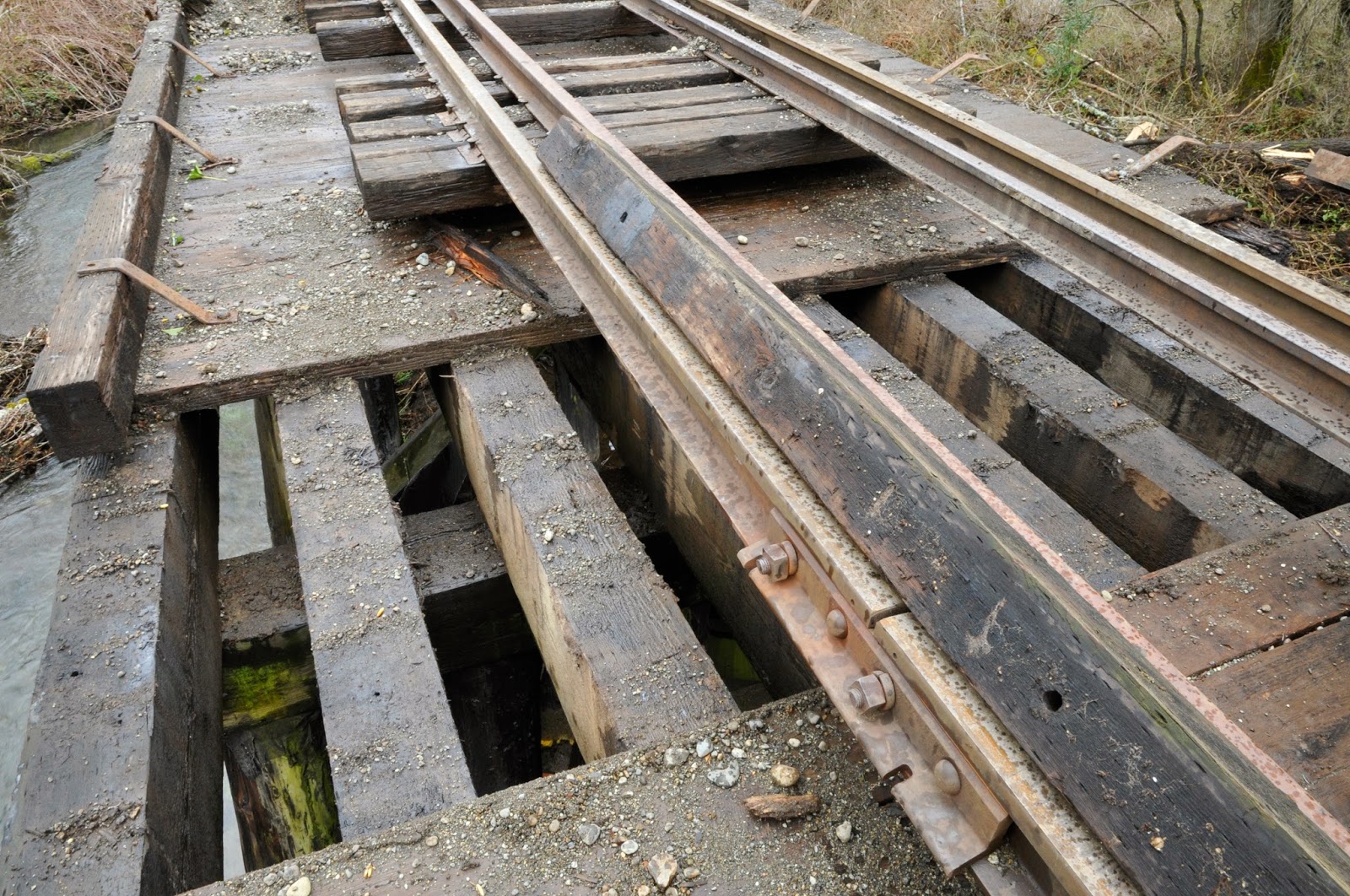
Damaged sections are obvious but
the method for replacement is not.
Most bridges are near water and at a minimum require a hydraulic permit before work can begin, and this usually adds conditions to a project.  Railway bridge work - by law - must be supervised by someone experienced in the maintenance and repair of railway bridges.  And any modifications must be reviewed by a qualified railway bridge engineer.  So even the damage caused by a tree striking a bridge triggers a variety of additional requirements besides just ordering new timber.

A tree striking a bridge?  Yes, that was the subject of a recent blog post. A very large tree struck and damaged formerly Northern Pacific's Bridge 35's trestle during a recent windstorm. Bridge inspectors allowed several trains to pass but stipulated that permanent repairs had to be undertaken right away. And as one of the largest objects in the Museum collection, how those repairs are performed is also critically important for collection care standards. So the Museum committed to completion prior to the start of the 2014 operating season using an experienced contractor and licensed engineer.

First of the timbers required to repair
Bridge 35 arrived and were moved to
the site using the Speedswing.
Step one: given the urgency of the bridge repair, the Northwest Railway Museum was able to secure an emergency hydraulic permit. Step two: pressure-treated railway bridge timbers were located in South Dakota (ironically, made from Douglas fir cut near Tacoma) and were ordered. Step three: a qualified contractor, foreman and engineer were identified and hired.  Step four: real work begins!

Stringers under the timber deck are
exposed during the pile cap replace-
ment.
To help control costs, some of the site preparation was performed by community work crews. They removed bolts and shovel railway ballast off the deck. In addition, Museum volunteers cleaned, chased threads, and primed the bolts to allow reuse. And the Museum agreed to supply the materials to avoid handling charges from the Contractor.

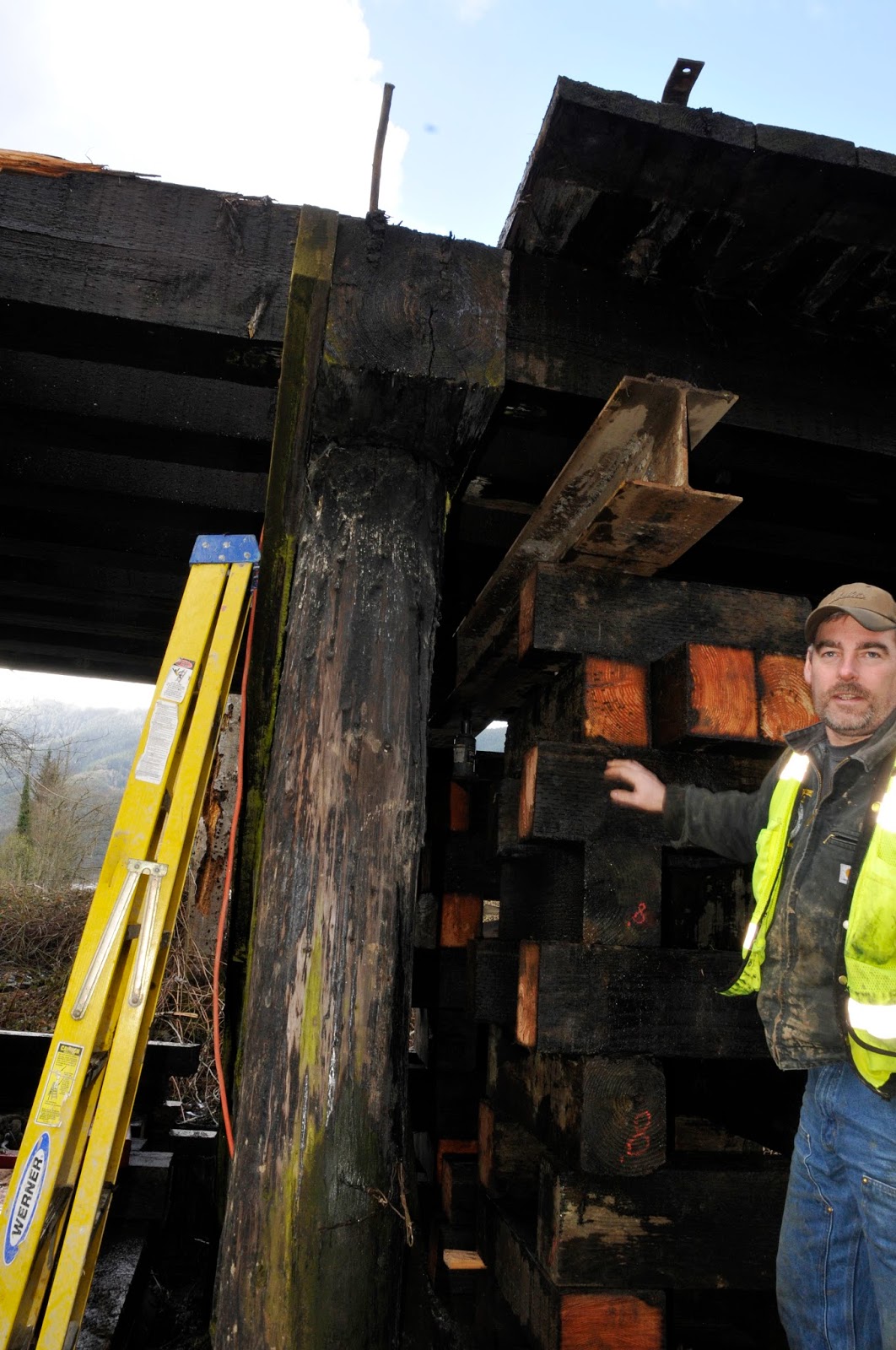
Bridge deck is supported
with blocking and a wide
flange beam.
Late in March 2014 Pivetta Brothers Construction began work on the bridge under the supervision of Muth Consulting Engineers.  Best practices including a silt fence were established to prevent any silt, dirt, rock or pieces of wood from getting in the river. Concrete ecology blocks and timber jacking pads were situated under the damaged section. Damaged deck and curb timbers were removed along the the stringers. Bracing and bolts were removed from the pile cap. Then blocking was used to support a wide flange beam that in turn was used to support the bridge deck. This allowed the damaged pile cap (the end was lightly crushed when the tree hit) to be removed and replaced.

Two new stringers were installed
above the new pile cap.
Two stringer sections each 28 feet long, 9 inches wide and 18 inches deep were damaged by the tree strike.  These were replaced with two new Douglas fir stingers of similar (slightly wider) dimension that were pressure treated with copper naphthenate preservative. The timbers had to be drilled for indexing pins, and for bolts to tie the stringers to the deck and ballast curb.

Total working time for the trestle repair was five days and was completed before the end of March; costs exceeded $25,000.  Ideally, this would have been the extent of bridge work for 2014.  However that was not to be and will be the subject of an upcoming blog post.


Damaged section is repaired!  New ties have been installed
and the track is about to receive new ballast.  The new and
existing ballast curb is shown on either side of the deck.


Tuesday, March 25, 2014

A bridge not far enough!

A recent wind storm has had a devastating impact on the Northwest Railway Museum's bridge 35.  A large cottonwood tree that measures more than five feet at the base has blown over and landed on the structure.  Estimates are that the tree weighs more than 12,000 pounds and the bridge was subjected to the entire force.

While the tree was intertwined with the bridge structure, damage appeared to be minor. Unfortunately, serious damage became obvious as soon as the tree was removed. Significant damage was sustained by the outer stringers, a pile cap, and some of the deck boards that support the ballast.

Bridge 35 brings the railroad into downtown North Bend and consists of a through-pin-connected Pratt truss and two segments of conventional wood trestle structure. The Pratt truss was first erected over the Yellowstone River in Montana in 1891, and moved to North Bend in 1924. However the damaged section is constructed of timber and dates from 1923.  The last major work on this section was performed in 1964.

A bridge inspection and cost estimates are driving the repairs.  The Museum blog will feature another post while repair work is underway.


Saturday, March 22, 2014

A signal indication

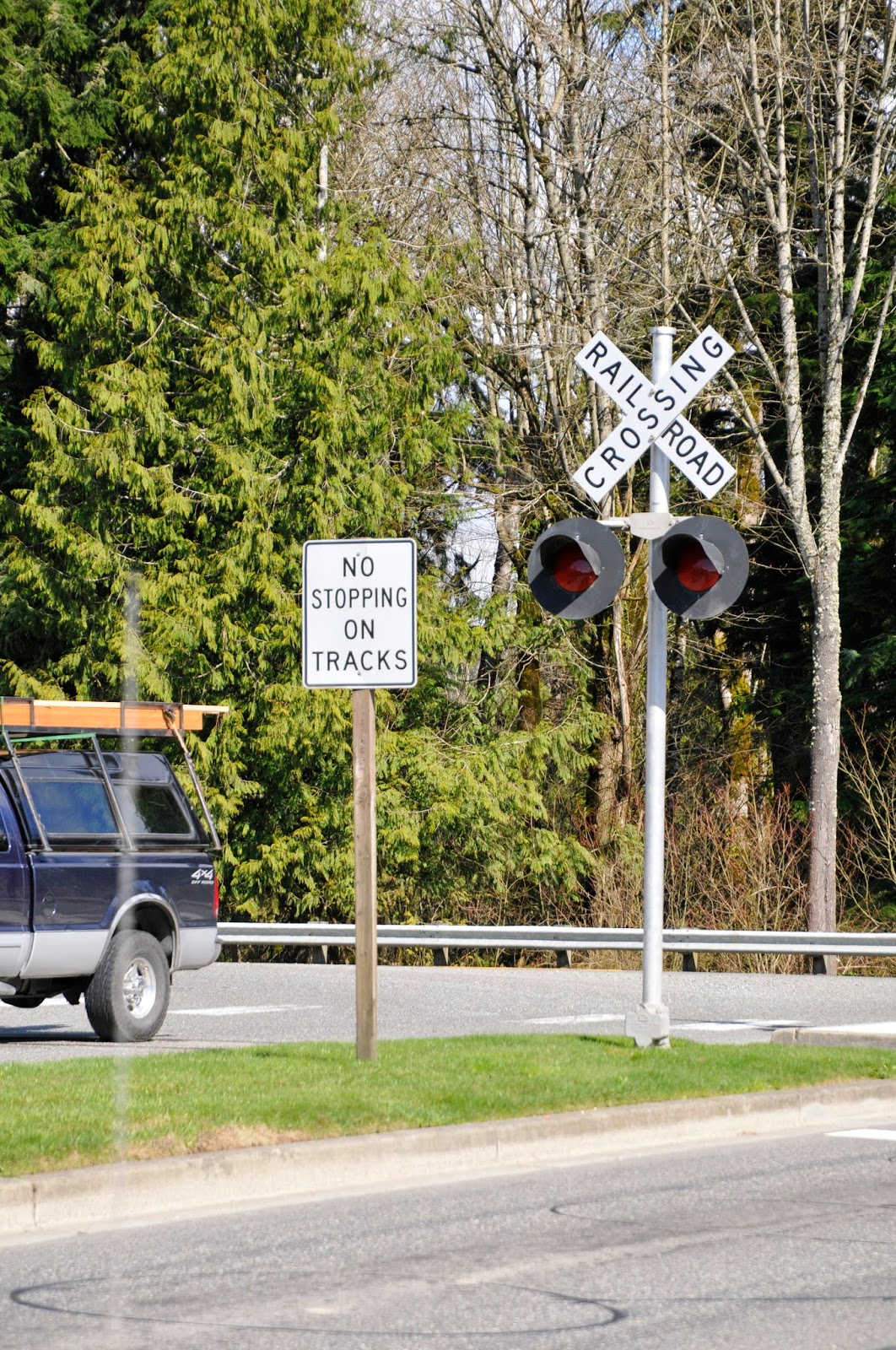
Winter weather often brings challenging driving conditions, and with that comes the inevitable opportunity for mishap. And so was the outcome of a recent winter driving incident at the Snoqualmie Parkway railway crossing.  The incident did not involve a train or engine, and there were no serious injuries.  However, the multiple vehicle accident resulted in the loss of a mast and signals in the center median when a deflected vehicle struck the mast, broke it off at the base, and the resulting impact with the local terrain damaged nearly every component.  Fortunately, no one was seriously injured, and the vehicle owner was appropriately insured.

The Northwest Railway Museum is responsible for five railroad crossing signal systems. With limited project work and just occasional component failures, the Museum only rarely purchases replacement parts.  So it came as quite a surprise to learn how much consolidation and change in the railroad signal industry has taken place in the last few years: now many signal components are supplied by Siemens Rail Automation, and nearly everything is made to order. So instead of purchasing parts "off the self," a new assembly was ordered.  About six weeks later, it arrived on a truck ready for installation.
The installation was completed in a few hours and the system was tested.  Costs totaled more than $6,000 and were fully reimbursed by the vehicle's insurance carrier.  Now the Snoqualmie Parkway signals are back in service and ready for the upcoming operating season!

Thursday, February 13, 2014

Meet Peggy Barchi!

The Northwest Railway Museum welcomes a new Marketing & Events Manager, Peggy Barchi. The position’s key responsibilities include promotion of all Museum programs including regular season train rides, the Tour Package program, Day Out With Thomas the Tank Engine™, Halloween Train, and Santa Train®. The Marketing & Events Manager also manages Snoqualmie Railroad Days, working with a dedicated group of local volunteers to insure the success of that important town festival.

Peggy comes to the Museum from Fort Nisqually Living History Museum in Tacoma, where she was the Events’ and Volunteer Coordinator for over 10 years. Besides organizing events and volunteers, she worked on educational demonstrations such as Oregon Trail hikes, butter making, and 19th Century laundry techniques; taught classes on “Before There Were Video Games,” developed and maintained exhibits, worked on promoting the museum and its programming and was head chicken wrangler for the fort’s livestock! She continues to edit the Fort Nisqually Foundation’s tri-yearly magazine “Occurrences – Journal of Northwest History.


In addition to her time at Fort Nisqually, Peggy has volunteered for a variety of organizations including: PTAs, youth activity groups, amateur radio organizations as well as other museums. Peggy and her husband live in Maple Valley and enjoy traveling when time permits, especially to other historic areas within Washington. She looks forward to getting to know, meet and work with the people of the Snoqualmie Valley.

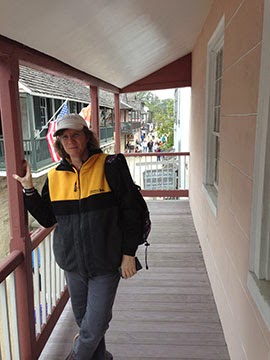
Photo caption: Peggy Barchi in the Colonial Quarter, St. Augustine Florida, February 2014.

Thursday, January 2, 2014

Do you want to work in a museum?

Update: marketing/events position has been filled.

The Museum staffs its programs and events with volunteers but program management is performed by a staff of five full time professionals. As 2014 begins, one of these positions is vacant: the marketing/events manager; the Museum is now accepting applications.

The new marketing/events manager will become a vital member of the management team and help shape the continuing development of the Museum. The successful candidate will be responsible for marketing all programs, and managing the annual Snoqualmie Railroad Days community festival. 

Does this sound interesting?  Read on to learn the details:
Position announcement – MARKETING/EVENT MANAGER The Northwest Railway Museum is located in Snoqualmie approximately 30 miles east of Seattle, Washington.  The Museum operates an historic depot and museum, exhibits, and an excursion railroad between Snoqualmie and North Bend, Washington.  In 2012 the Museum received more than 88,000 visitors and has an annual operating budget of more than $700,000. 
The Museum has a full time employment opportunity for a HIGHLY motivated individual who possesses marketing and event management experience (at least three years), exceptional organizational skills (we will check!), outstanding oral and written communications skills (we will test you for this), and possesses at least a general understanding of the environment in which museums and nonprofits operate (we'll quiz you on this too). 
You will become a member of the Museum’s management team of five with whom you will work closely.  You will be accountable for successfully marketing all Museum events, and will be responsible for managing the annual town festival.  Other specific duties and responsibilities include marketing and community outreach efforts, social media, Internet listings, web site maintenance, addressing visitor issues, managing volunteers within your responsibilities, managing ticket agents and ticket sales, and additional duties as assigned. 
The successful candidate possesses a minimum of a Bachelor degree or better education, has prior nonprofit and/or museum experience, and will be able to pass a criminal background check and drug test.  Other desired qualifications include prior volunteer recruitment and management experience, strong computer skills including web site administration, clear and concise writing skills, and a demonstrated ability to work under deadlines; you must be a self-starter and be responsible. 
The position is salaried and overtime-exempt.  You will be required to work the hours necessary to successfully fulfill your responsibilities; this may include weekends and holidays during major Museum events and outreach efforts.   

Wednesday, December 25, 2013

Merry Christmas!

Deputy director Jessie C., Visitor services 
James S., Volunteer coordinator Cristy L., 
Bookkeeper Jennifer Y. and Director 
Richard A.
Christmas and the railroad

In their roles as museum educators, staff work hard to remain truthful and accurate in creating interpretive programming. However, they must also use today's conventions to help people understand yesterday's.  Identifying the year-end holiday season as "Christmas" considers a recent Angus Reid Global poll that found 80% of people in the United States, Britain and Canada prefer to call the holiday season "Christmas." That is a pretty convincing majority!

So what do a refer car, box car, brakeman, coach car, express car, locomotive, conductor, railroad bridge, depot, and chapel car all have to do with "Christmas?"  Everything!

While examining the impact of railroads on the Northwest it is nearly impossible to ignore the role of significant cultural practices, including the celebration of Christmas. Why? Christmas and other major holidays have had - and continue to have - a tremendous impact on railway transportation including express, freight and passenger service.  Railroads brought (bring) families together, letters and packages to family members, and goods to retailers. Railroads even transport many Christmas trees from farms to your local communities.  So Christmas might not be very merry without the railroad!

Thank you to everyone! 

As another successful Santa Train program is completed and 2013 draws to a close, I am delighted to reflect upon another great year at the Northwest Railway Museum. In doing so, what is clearly evident are all of the generous contributions of time, talent and funding that have helped make the Northwest Railway Museum and its programs possible.  By the numbers, the human side of the Museum's success was a handful of management and other key staff, a dozen trustees and advisers, a gaggle of special contractors, more than 125 volunteers, and hundreds of donors. They all worked together to serve more than 90,000 guests who got to see and understand the role railroads played in the development and settlement of the Northwest.  

From all of us to all of you, have a Merry Christmas!

--Spike

Thursday, December 5, 2013

New tools of the trade

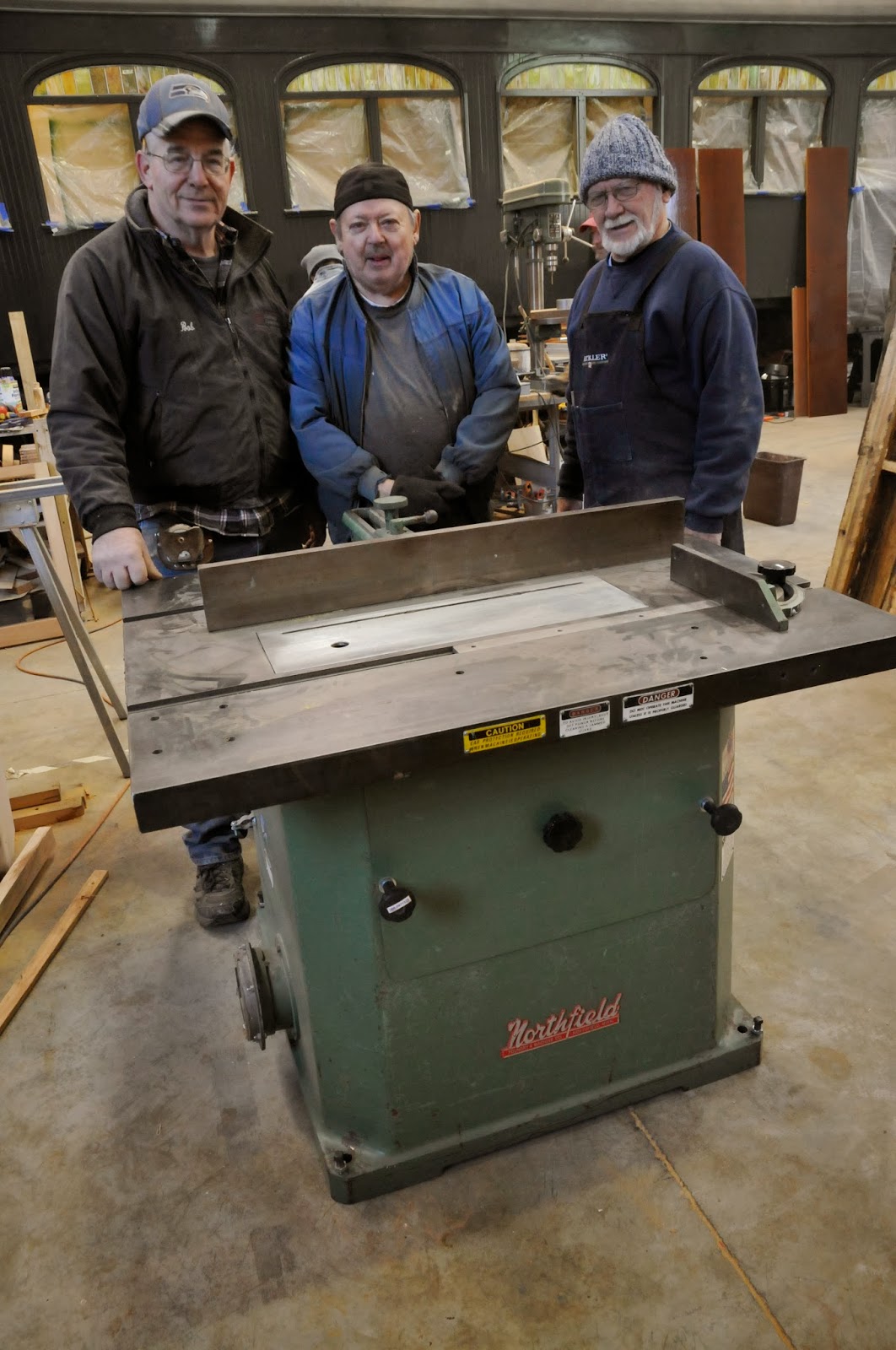
The Museum's "new" Northfield model 4
Many skilled professionals will agree: having the right tool for the task is worth at least half the effort.  And so it applies to railroad cars and locomotives, but the tools are a little bigger than most people are accustomed to. 

Recently, with funding from a heritage 4Culture fixed asset grant, the Northwest Railway Museum added a power feeder and large table saw to the tool inventory. These acquisitions improve safety and efficiency for collections care efforts performed in the Conservation and Restoration Center

The Museum purchased a Northfield model 4 table saw complete with a 7.5 HP motor.  The 1990s-vintage saw tips the scales at nearly 2,000 pounds and will accommodate a blade diameter up to 20 inches.  It was located in Kentucky and shipped to the Museum in November.

Bob models the new 1 HP power feeder

The Northfield model 4 remains in production today in their factory in Minnesota.  Parts are available and so is technical support.  A new model 4 retails today for more than $16,000; the Museum paid less than 1/3 of the new cost for its lightly-used model 4.  This newer and larger saw is more stable and will allow workers to rip thicker and harder wood than the saw is replaces, which was built in 1926 and weighs "only" a few hundred pounds.

A new Grizzly-brand power feeder now graces the spindle shaper table too.  The Museum’s Oliver shaper features a 5 HP motor and hand feeding of stock is incredibly dangerous.  The new power feeder has been sized for this application and is used to slowly feed wood into the cutter head.  It was recently used to shape the rails and stiles for new coach 218 windows.  The shaper is also used to shape the moldings used both inside and outside the coaches.

4Culture offers the fixed asset equipment program to arts and heritage organizations located in King County, and funds the awards with lodging tax revenue.  Sound systems, stage lighting, instruments, shelving, and image scanners are other examples of purchases funded by the program in King County-based museums and arts organizations. This recent award is the Northwest Railway Museum's first fixed asset grant.

Thank you 4Culture!